Category: NEWS/PRESS

  • FRACTIONAL COMPLIANCE STAFFING – From learn2comply

    Learn2comply-Final

    Quality Compliance Professionals for a Fractional Monthly Commitment

    A compliance professional is a key business partner for each lender. He or she is someone who can develop and implement compliance initiatives, review, write and approve policies and procedures, review new lending product roll-outs, respond to regulatory and BBB complaints, and review contracts and prospective vendors.

    learn2comply’s team of compliance professionals steps in and works with each lender to build long-term sustainable programs.

    learn2comply’s Fractional Compliance Professionals give you the heft and breadth of a compliance professional on your team, a consistent voice at the leadership table, and the peace of mind of not having to carry a large financial burden.

    learn2comply’s Fractional Compliance Professional offering allows its clients access to a full and consistent strategic partner without the commitment of a full-time position.

    learn2comply’s compliance professionals are not “between jobs” or looking to find a “home”. They are committed financial and compliance professionals who understand the value of working and making a difference.

    learn2comply’s Fractional Compliance Professionals are able to step in immediately to help out in a wide array of services. Because every lender has unique compliance needs and loan products, learn2comply takes great pride in integrating in the manner that best fits our client’s organizational structure.
    learn2comply delivers compliance expertise in the following functions and specialties:

    • Lending Policies and Procedures
    • Compliance Training
    • Contract Review
    • Prospective Vendor Review
    • Transaction Monitoring (Review Alerts, Flags or Exceptions)
    • Enhanced Due Diligence (EDD) for high risk customers
    • Evaluation of lender’s monitoring process to determine accuracy, efficiency and compliance with regulators’ expectations

    For more information contact learn2comply at (888) 570-1160, sales@learn2comply.net, www.learn2comply.net.

  • Market Data & Consumer Behavior

    Can you stop debt collectors from harassing and suing?

    BY CHARLES PEKOW · AUGUST 9, 2014 ·

    Collectors call again and again in the middle of dinner. They call the wrong person. They threaten. They take advantage of the latest technology to embarrass people. Often, they violate the law. Debt collectors will go to all sorts of legal and illegal means to intimidate people who owe or allegedly owe money. Collection has become a multi-billion dollar business, especially in the last few years as the slow economy had caused people to fall behind on payments.

    About 30 million Americans were saddled with debt or alleged debt in collection in 2012, averaging about $1,500 according to the Consumer Financial Protection Bureau (CFPB).

    Law has fallen behind technology and the extent of the problem.

    Realizing this, Congress created CFPB and granted it limited authority to write rules to govern part of the problem under the Dodd-Frank Act in 2010.  Four years later, CFPB collected public comments on the problem over the winter. It plans to survey consumers this summer about their experience and knowledge of their rights.

    “I used to be harassed by debt collection agency for a debt that was not my own. I used to have a different phone number. I had to change it because I kept on getting calls from a collection agency that were intended for the prior owner of the phone number. It did not matter how much I told them that they were calling the wrong number. I still got calls,” wrote Dylan Tate, a citizen responding to CFPB.

    “What amazes me more than anything else is the impossibility of getting a wrongful debt removed from the record. I was a straw man in real estate and the person who stole my identity was arrested, tried and found guilty and sentenced and served time – YET – more than 15 years later I am still receiving calls from debt collectors for forged name documents and statements on my credit report for properties I never owned. How can this be stopped or cleared up?” wrote Gerald Elgert of Silver Spring, Md.

    Though the slow economy exacerbated the problem, an improving one may not help. “Debt collection agencies will experience renewed demand,” as people regain ability to pay, Market research firm IBISWorld reported last November.

    Medical debt – the largest source of unpaid bills. Medical bills and educational loans are eclipsing the traditional mortgages and auto loans as the fastest growing categories of debt in collection.

    But CFPB’s new authority extends to only the largest companies – it estimates its proposed rules would cover about 175 firms. IBISWorld counted 9,599 firms in the business last fall.

    The Federal Trade Commission (FTC) has historically taken the lead role in the issue. The FTC “receives more complaints about debt collection than any other specific industry and these complaints have constituted around 25 percent of the total number of complaints received by the FTC over the past three years,” James Reilly Dolan, acting associate director of the FTC’s Division of Financial Practices said in July Senate testimony. The FTC got 199,721 collection complaints in 2012, up from 142,743 complaints in 2011 and 119,609 in 2009. Almost 40 percent of disputes about national credit reporting agencies concern collection. (FTC figures don’t include other complaints it gets that might include debt collection but it codes as identity theft or do-not-call grievances.)

    So who is annoying the most people with repeated phone calls, threats, obscenity and other obnoxious tactics to collect debt? Largely major banks and collection agencies they hire.

    In response to a Freedom of Information Act (FOIA) request, the FTC provided a list of the companies getting the most complaints over a 28-month period. They had, by and large, already gotten into legal trouble but that didn’t stop them from continuing to bother people.

    1. NCO Financial Systems, Inc, a Horsham, PA collection agency (now Expert Global Solutions), with 6,223 complaints. In 2004, NCO paid the FTC $1.5 million, at the time a record debt collection fine. But last July, it broke its own record and paid the largest ever civil penalty in a debt collection case, $3.2 million. “It’s the one we get the most complaints about,” said consumer lawyer Craig Kimmel. Its “dialing system is otherworldly in its sophistication to keep calling people….They will keep calling until somebody pays and people will pay just to get rid of them.” Vaughn’s Summaries, a general reference website, called it “the worst debt collection agency.”
    2. Allied Interstate, Inc., part of iQor, a privately-owned conglomerate. Allied wracked up 4,934 complaints covering everything from repeated phone calls to falsely representing alleged debts to calling at inappropriate hours. Allied paid $1.75 million in 2010 to the FTC to settle charges of telephone harassment – the second largest fine of its kind at the time. While Citibank, the nation’s third largest bank, doesn’t show up on the list of top violators, that doesn’t mean it’s not profiting from questionable tactics. Another division of parent company Citigroup owns a large stake in iQor. “I draw two conclusions,” stated Sen. Sherrod Brown (D-OH) at a recent Senate hearing. “Citigroup and other banks think debt collection is a lucrative business. There’s a reputational risk to associating with those companies. Citigroup probably does not want their name on an aggressive means so they have iQor or Allied Interstate or something.”
    3. Portfolio Recovery Associates (PRA) with 4,481 cases, more than 1,000 of them charging callers with failing to identify themselves. The Norfolk, Va.-based company specializes in buying debt, especially of bankrupt people for a fraction of the value and trying to collect the entire sum. PRA is subject to at least five class action and multiple individual suits for alleged wrongdoing such as calling cellphones without permission. PRI denied to us that it breaks laws.
    4. Capital One Bank, an Allied client, with 3,054 accusations, including calling repeatedly and continuously, at inappropriate times, not sending written notices, refusing to verify debt, and profanity. Kimmel sued Capital One for harassing and demanding almost $287 million from a woman over a debt of less than $4,000.
    5. Deceptive trade practices and violating a 2009 order. The state charged that the bank continued to “mislead consumers with false promises” that they would not foreclose on homeowners while simultaneously foreclosing. Nevada also charged BofA with a litany of other misrepresentations including “falsely notifying consumers or credit reporting agencies that consumers are in default when they are not.” BofA paid penalties and agreed to change tactics.
    6. Midland Credit Management (MCM), a national debt buyer that use several names, including Encore Capital Group and Ascension Capital Group, with 1,778. MCM’s parent company reported to the Securities & Exchange Commission that it bought $8.9 billion in credit card debt during the first half of 2012 for about 4 cents on the dollar. The company specializes in suing debtors. MCM paid nearly $1 million in fines to Maryland in 2009 for alleged violation of state and federal laws, including operating without proper licensing. Though CFPB officially opened a complaint line in July about collectors, it got 750 such gripes in the first quarter of 2013, according to information received under FOIA. Consumers complained by far the most about Midland – 44 times, or six percent of the total.
    7. I.C. System at 1,767, mostly for calling “repeatedly or continuously.” The Minnesota Dept. of Commerce fined I.C. $65,000 for violating a variety of state laws, including failure to screen job applicants properly, hiring felons and not notifying the state that it dismissed at least 10 employees for using profanity. The U.S. Better Business Bureau received 807 complaints about I.C. in the last year.
    8. Similar name) at 1,644. The company went out of business after five state attorneys general sued it. NCS was acting on behalf of Hollywood Video, the movie rental service that went bankrupt in 2010. NCS was filing negative credit reports on consumers and threatening to sue them if video renters didn’t pay up. The problem stemmed from movie watchers who tried to return videos at stores that closed, said company founder Brett Evans. Though customers followed instructions to leave videos in a bin, their returns weren’t recorded and NCS tried to collect late fees.
    9. JP Morgan Chase, an NCO client, with 1,522. The Office of the Comptroller of the Currency (OCC) last September issued a Consent Cease and Desist order against Chase for multiple “unsafe and unsound practices” in its collection work, including filing misleading documents in court, not properly notarizing forms and not properly supervising its employees and contractors.

    California’s attorney general sued the bank last year for allegedly routinely suing consumers for non-payment without following proper procedures. Unless otherwise noted, the companies either declined to address the charges or did not respond to inquiries. Mark Schiffman, spokesperson for ACA International, the largest collector trade group, said “they’ve made it pretty darn easy to complain in the first place. It’s not fair to say that the (FTC files) are a bellwether, that this is a horrible industry.”

    The FTC got one of its largest settlements, $2.8 million, from West Asset Management last year. West didn’t show up on the above list as many people named their creditor, not the collection agency, when complaining. The Omaha, NB-based West agreed not to engage in tactics the FTC accused it of, including calling the same individuals multiple times a day, using “rude and abusive language” and disclosing information to third parties.

    But West was making plenty of the calls that led to trouble for the banks. West said on its website that its clients include “seven of the top 10 credit card issuers, and other Fortune 500 companies.” The top five include four of the biggest sources of complaints: Chase, Capital One, Citigroup and BofA, according to Card Hub, an online search tool.

    Only 15 lawsuits in nearly four years. It lacks the resources to handle every complaint so it focuses on the most serious abusers or cases that can establish a legal precedent. While CFPB is now taking complaints and can write rules, its small staff won’t be able to make more than another dent in the problem.

    An FTC report on the issue said “based on the FTC’s experience, many consumers never file complaints with anyone other than the debt collector itself. Others complain only to the underlying creditor or to enforcement agencies other than the FTC. Some consumers may not be aware that the conduct they have experienced violates (the Fair Debt Collection Practices Act, or FDCPA ). For these reasons, the total number of consumer complaints the FTC receives may understate the extent to which the practices of debt collectors violate the law.”

    And much lies out of FTC jurisdiction. FDCPA, for instance, does not apply to banks, on the theory that banks are less likely to annoy their customers than an outside collector. If a bank harasses people, the victims can contact OCC or Federal Deposit Insurance Corporation. But if a bank hires a collection agency, the consumers can go to the FTC. Judging by a look at the FTC complaint database, people are confused. “We do get a lot of complaints” about banks, said Tom Pahl, who served as assistant director of the FTC Bureau of Consumer Protection (BCP) before becoming CFPB’s managing regulatory counsel. William Lund, superintendent of the Maine Bureau of Consumer Credit Protection, said at a CFPB forum that people are so baffled that he gets many complaints from out of state.
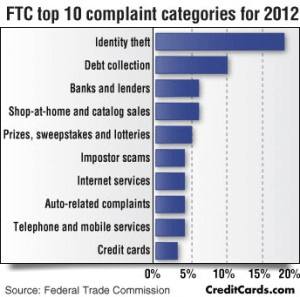
    4
    What are consumers complaining about? The FTC log said that about half of debtors or alleged debtors simply complained of harassment. Thirty percent said they never even got a required written notice before calls came. A quarter said they got threats of civil or criminal action ranging from garnishing wages to seizing property, harming credit ratings and getting forced out of jobs. And 23 percent said the callers didn’t even identify themselves as debt collectors.

    About 16 percent complained of obscenity, eleven percent said collectors were violating the law by calling before 8 am or after 9 pm. and four percent cited threats of violence. Ten percent griped of efforts to collect unauthorized money (interest, late fees, court costs). People also complained about everything from overstating debt, calling at work, continuing to call after getting a written notice not to, and not verifying debt when asked in writing or misrepresenting the law. (Many complaints alleged multiple violations.)

    And 22 percent of the complaints regarded collectors bothering third parties, such as an alleged debtor’s family, friends, coworkers, employers and neighbors. By law, collectors may only contact other people to locate an alleged debtor. The FTC reported that collectors “have used misrepresenting as well as harassing and abusive tactics in their communications with third parties, or even have attempted to collect from the third party.”

    And when you die, your debt doesn’t die with you and neither do collections. Collectors have often called relatives to ask if they’re the one who opens mail or paid for the funeral. If someone said “yes,” collectors have taken that as proof they’re the ones responsible and then asked about assets. So last year, the FTC decreed that collectors may inquire as to who has been designated the estate executor, and then only communicate with that person – and not try to collect debts before they locate the executor. Estates retain rights to contest claims.
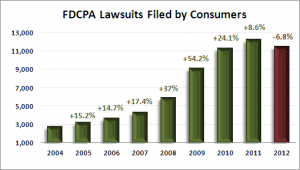
    5
    Congress wrote FDCPA in 1977 – when collectors used rotary phones as the chief weapon to annoy people. So nothing in the law stops collectors from sending texts, emails and misleading Facebook friend requests to those they want to collect from. Collectors post messages on social network sites of friends and relatives. At a workshop on the issue, BCP Director David Vladeck said that though “using these communications media to collect debts isn’t by itself necessarily illegal, the potential for harassment or other abusive practices is apparent.”

    The law gives the FTC no authority to write rules. The law prohibiting contact before 8 am or after 9 pm was intended to apply to telephones and it’s not clear whether it applies to after-hours email.  And FDCPA includes no criminal penalties.

    Two years ago, an FTC report stated “neither litigation nor arbitration currently provides adequate protection for consumers. The system for resolving disputes about consumer debt is broken.” Arbitration efforts flopped. Three years ago, the Minnesota Attorney General sued the National Arbitration Forum, citing fraud, deceptive trade practices and false advertising – the forum didn’t tell people of its financial ties to the industry. The forum settled and stopped arbitrating.

    Consumers also get confused because of the growing debt buying business. Companies specialize in buying debts usually for between five and ten cents on the dollar, then trying to collect the whole shebang. (The nation’s 19 largest banks sell about $37 billion a year in credit card debt, according to OCC.) So people hear from a company they’ve never heard of claiming they owe money. Almost no one engaged in this practice in 1977 so it’s not clear how FDCPA affects debt buyers. People can pay their original creditor after it sold the debt and think they’ve settled the matter, only to face continued collection efforts from the buyer.

    OCC said it is working on guidance and “has raised its expectations for banks” in this regard. “Selling debt to third party debt collectors carries particular compliance, reputational, and operational risks,” OCC said in a statement given in July to Brown adding “it is evident these risks are gaining increasing prominence.” Brown said that “OCC has historically been more friendly to banks than to consumers.”

    Kim Phan, a lawyer for debt buyer trade association DBA International, said the organization is working on guidance for the industry.

    Collectors do more than call and harass. They sue. The New Economy Project (NEP), a New York community advocacy center, recently released a report stating “debt collection lawsuits — particularly those filed by debt buyers — wreak havoc across New York State, depriving hundreds of thousands of New Yorkers of due process and subjecting them to collection of debts that in all likelihood could never be legally proven.”

    In 2011, collectors – mostly buyers – filed 195,105 lawsuits against New Yorkers. Almost two-thirds of the time, plaintiffs win default judgments but seldom win on the merits when cases go to trial, NEP said. “A lot of the debt that we see that’s charge-off by banks is debts that they’ve sold off for pennies on the dollar with very little documentation so the banks aren’t held accountable for that debt and the collectors who are trying to collect…are doing so with very limited information and sometimes don’t have sufficient proof and therefore rely on robosigning and other abusive tactics,” declared Alexis Iwanisziw, NEP research and policy analyst, speaking at a July CFPB forum.

    Congress has ignored legislation introduced in recent years to modernize the law. In previous years, senators Charles Schumer (D-NY), Al Franken (D-MN) and Carl Levin (D-MI) conducted hearings and introduced bills but failed to move them. They dropped the issue in the current Congress. Their offices did not respond to inquiries.

    Brown, however, examined the issue at a July hearing of his Senate Banking, Housing & Urban Affairs Subcommittee on Financial Institutions and Consumer Protection. Brown said in an interview “I don’t know about a legislative solution” and that recent events gave him “hope we may be able to do something (but) we won’t reopen Dodd-Frank in a major way.”

    Collection Complaints Tracked for Full Year

    BY DARREN WAGGONER

    AUG 20, 2014 2:17am ET Collections & Credit Risk

    Complaints against debt collectors filed with the Consumer Financial Protection Bureau edged lower in July compared with June – 3,269 from 3,390, according to data reported Tuesday.

    July marks one year since the CFPB began fielding complaints against the collection industry. In July 2013, there were only 901 complaints filed as the CFPB ramped up the program. Those numbers jumped the next month. WebRecon, a data tracking firm based in Grand Rapids, Mich., pulled the data from the CFPB, along with lawsuit totals filed at U.S. district courts.

    There were a total of 717 debt collectors complained about in July. Editor’s Note: More information on the types of complaints can be found at the bottom of this story.

    On the statutory front, consumers filed 828 Fair Debt Collection Practices Act lawsuits, of which 9.9% are class actions. Year-to-date, FDCPA lawsuits through July 31 totaled 5,701, down 12.4% from 6,406 filed in July 2013.

    Telephone Consumer Protection Act and Fair Credit Reporting Act lawsuits showed some volatility in July compared with July. TCPA cases fell nearly 8% (to 196 from 211) and FCRA lawsuits rose more than 15% (to 202 from 171) from the previous month.

    Of the FCRA lawsuits, 21 (10.4%) are class actions. Of the 196 TCPA lawsuits, 19 (9.7%) are class actions.

    Year-to-date both TCPA and FCRA lawsuits are significantly higher. TCPA cases are up 33.6% (1,525 compared with 1,012 last year); FCRA cases are up 11.6% (1,376 compared with 1,217 last year).

    Some 855 different collection agencies and creditors were sued in July. Of the cases, there were an estimated 1,146 unique plaintiffs. Of the plaintiffs, approximately 365 (or 32%) previously sued under consumer statutes. Combined, those plaintiffs have filed approximately 1,564 lawsuits since 2001.

    Attorneys Sergei Lemberg and David Michael Larson were the most active attorneys in July, filing 30 and 25 lawsuits respectively. Lemberg (323 lawsuits) and Larson (162 lawsuits) also top the year-to-date list.

    The types of debt behind the complaints were:

    •    886 Other (phone, health club, etc.) (27%)
    •    712 Unknown (22%)
    •    679 Credit card (21%)
    •    407 Medical (12%)
    •    263 Payday loan (8%)
    •    105 Mortgage (3%)
    •    87 Auto (3%)
    •    74 Non-federal student loan (2%)
    •    56 Federal student loan (2%)

    The breakdown of complaints:
    •    1,347 Continued attempts to collect debt not owed (41%)
    •    653 Communication tactics (20%)
    •    563 Disclosure verification of debt (17%)
    •    268 False statements or representation (8%)
    •    239 Taking/threatening an illegal action (7%)
    •    199 Improper contact or sharing of info (6%)

    The top 10 states complaints were filed from are:
    •    441 Complaints: California
    •    288 Complaints: Texas
    •    254 Complaints: Florida
    •    173 Complaints: New York
    •    164 Complaints: Georgia
    •    138 Complaints: Ohio
    •    116 Complaints: New Jersey
    •    115 Complaints: Illinois
    •    113 Complaints: Pennsylvania
    •    106 Complaints: Virginia

    The status of the month’s complaints are as follows:
    •    2,225 Closed with explanation (68%)
    •    573 Closed with non-monetary relief (18%)
    •    241 In progress (7%)
    •    114 Closed (3%)
    •    75 Untimely response (2%)
    •    41 Closed with monetary relief (1%)

    Consumer Default Rates Fall to 10-Year Low

    BY DARREN WAGGONER

    AUG 19, 2014 12:30pm ET Collections & Credit Risk

    Default rates fell slightly in July to the lowest mark in more than 10 years, according to the S&P/Experian Consumer Credit Default Indices released Tuesday.

    The national composite default rate posted 1.01% in July, down one basis point from June. After declining for nine consecutive months, the first mortgage default rate fell to 0.88%. The bank card rate declined 16 basis points to 2.86%.

    Auto saw its rate remain unchanged at 0.96% and is only four basis points above its historical low.

    “Consumer credit default rates dipped slightly below last month’s rate,” says David M. Blitzer, managing director and chairman of the Index Committee for S&P Dow Jones Indices. “At just above 1%, default rates remain at historical lows. Mortgage default rates have been trending down while auto and bank card are a bit higher than their historical lows set in April and March. Driven by mortgages, household debt decreased in the second quarter of 2014. Non-housing debt rose slightly in the second quarter. In the latest Federal Reserve survey of lending standards, a small portion of banks reported some easing of standards while most banks reported no change.”

    Among large cities, Blitzer said Los Angeles dropped to its record lowest default rate of 0.66% and Dallas saw its default rate fall by seven basis points to only a few points away from its historical low set in May.

    “Chicago and Miami are at their lowest default rates since 2006. Miami continues to maintain the highest default rate of 1.51% while Los Angeles posted the lowest default rate of 0.66%. All five cities – Chicago, Dallas, Los Angeles, Miami and New York – remain below default rates seen a year ago,” he said.

    High-level data through July shows:

    •    The national composite default rate remains the lowest in over 10 years of history at 1.01%, down one basis point from last month.
    •    After nine consecutive months of declines, the first mortgage default rate fell to 0.88%.
    •    Auto saw its rate remain unchanged at 0.96% and is only four basis points above its historical low. Bank card rate declined 16 basis points to 2.86%.
    •    All five cities – Chicago, Dallas, Los Angeles, Miami and New York – remain below default rates seen a year ago.
    •    Miami continues to maintain the highest default rate of 1.51% while Los Angeles posted the lowest default rate of 0.66%
    •    Chicago and Miami are at their lowest default rates since 2006.

    Credit Card Late Payment Rate Drops to Seven-Year Low

    BY DARREN WAGGONER

    AUG 26, 2014 9:42am ET

    The rate of credit card payments overdue by at least 90 days dropped to 1.16% in the second quarter ending June 30, the lowest level in at least seven years, TransUnion reported Tuesday.

    The report indicates consumers are doing a better job of making timely payments even as lenders extend credit more often to people with troubled credit histories.

    The late-payment rate peaked in the first quarter of 2009 at 3.12%, TransUnion officials said. The credit bureau’s data dates to 2007, drawn from information culled from nearly every U.S. consumer who uses credit.

    Average card debt per borrower rose slightly in the second quarter, up about 0.2% to $5,234. It increased 1.4% from the first quarter of this year.

    The second-quarter credit card delinquency rate is down from 1.27% from the same period last year and 1.37% from the first three months of this year.

    Credit card borrowing began rising again in 2011, but the increases have lagged far behind other types of debt, including auto and student loans, according to TransUnion. Overall, U.S. credit card debt has increased 1.3% over the past year, reaching $873.1 billion in June, according to the Federal Reserve.

    Lenders are showing more generosity in the amount of credit they extend to cardholders. The average credit limit on new bankcard accounts has risen steadily, up 29.4% to $5,230 over the three-year period ended March 31, TransUnion said. The data lag by a quarter, so those latest TransUnion figures cover the January-March period.

    The increase in credit card limits indicates lenders are feeling they can take on more risk while giving consumers a bigger credit cushion, said Tony Guitart, TransUnion’s director of research and consulting.

    The number of new credit card accounts opened in the January-March period by consumers rose 17.8% to about 11.7 million versus the same period a year earlier.

    The share of cards issued to borrowers with less-than-perfect credit increased to 31.2%, compared with 27.3% a year earlier. That remains far below the roughly 45% share of cards going to non-prime borrowers before the recession.

    In the VantageScore credit rating scale, consumers with a score lower than 700 on a scale of 501-990 are considered non-prime borrowers.

    Debt Collection Litigation & CFPB Complaint Statistics, July 2014

    Quick analysis: July is a milestone month for CFPB complaints against debt collectors, if only because we have reached the one-year mark for complaint reporting and can begin benchmarking year-over-year comparisons.

    Having said that, month #1 for CFPB complaints against debt collectors (July 2013) was pretty tame with only 901 complaints filed – a number that we all know dramatically rises in the months to follow it.

    July 2014 saw a strong 3269 complaints filed, though that was down a bit from the previous month with 3390 complaints filed in June (up from the reported 3336 a month ago)

    On to the statutory horse race, We saw a second straight month of FDCPA gains, but the overall rate is still down double-digits YTD, at 12.4% below 2013.

    FCRA and TCPA both showed a bit of volatility last month, with FCRA up over 15% and TCPA down almost 8% from July. Both are still significantly up YTD though, FCRA at 11.6% and TCPA up 33.6% over 2013.

    Of the 828 FDCPA cases filed, 82 (9.9%) of them are class actions. Of the 202 FCRA lawsuits filed, 21 (10.4%) are class actions. And of the 196 TCPA lawsuits filed, 19 (9.7%) are class actions.

    Finally, 32% of the consumers who filed litigation in July are considered repeat filers, having filed similar litigation in the past.

    Comparisons: Current Period: Previous Period: Previous Year Comp:
    Jul 01 – 31, 2014 Jun 01 – 30, 2014 Jul 01 – 31, 2013
    CFPB Complaints  3269 3390 -3.7% 901 -262.8%
    FDCPA lawsuits  828 815 1.6% 886 -7.0%
    FCRA lawsuits  202 171 15.3% 176 12.9%
    TCPA lawsuits  196 211 -7.7% 143 27.0%
    YTD CFPB Complaints  23794 901 96.2%
    YTD FDCPA lawsuits  5701 6406 -12.4%
    YTD FCRA lawsuits  1376 1217 11.6%
    YTD TCPA lawsuits  1525 1012 33.6%

    Complaint Statistics:

    3269 consumers filed CFPB complaints against debt collectors and about 1146 consumers filed lawsuits under consumer statutes in Jul 2014. Here is an approximate breakdown:

    • 3269 CFPB Complaints
    • 828 FDCPA
    • 196 TCPA
    • 202 FCRA

    Litigation Summary (scroll down for CFPB data):

    • Of those cases, there were about 1146 unique plaintiffs (including multiple plaintiffs in one suit).
    • Of those plaintiffs, about 365, or (32%), had sued under consumer statutes before.
    • Combined, those plaintiffs have filed about 1564 lawsuits since 2001
    • Actions were filed in 160 different US District Court branches.
    • About 855 different collection firms and creditors were sued.

    The top courts where lawsuits were filed:

    • 74 Lawsuits: Illinois Northern District Court – Chicago
    • 56 Lawsuits: Pennsylvania Eastern District Court – Philadelphia
    • 46 Lawsuits: Colorado District Court – Denver
    • 44 Lawsuits: California Central District Court – Los Angeles
    • 33 Lawsuits: California Southern District Court – San Diego
    • 33 Lawsuits: New York Eastern District Court – Brooklyn
    • 31 Lawsuits: Michigan Eastern District Court – Detroit
    • 26 Lawsuits: Georgia Northern District Court – Atlanta
    • 25 Lawsuits: Florida Middle District Court – Tampa
    • 22 Lawsuits: Florida Southern District Court – Fort Lauderdale

    The most active consumer attorneys were:

    • Representing 30 Consumers: SERGEI LEMBERG
    • Representing 25 Consumers: DAVID MICHAEL LARSON
    • Representing 23 Consumers: TODD M FRIEDMAN
    • Representing 20 Consumers: KRISTINA N KASTL
    • Representing 20 Consumers: VICKI PIONTEK
    • Representing 20 Consumers: MICHAEL P DOYLE
    • Representing 20 Consumers: PATRICK M DENNIS
    • Representing 19 Consumers: CRAIG THOR KIMMEL
    • Representing 17 Consumers: ANGIE K ROBERTSON
    • Representing 17 Consumers: DAVID J PHILIPPS

    Statistics Year to Date:

    7401 total lawsuits for 2014, including:

    • 5701 FDCPA
    • 1376 FCRA
    • 1525 TCPA

    Number of Unique Plaintiffs for 2014: 7335 (including multiple plaintiffs in one suit)

    The most active consumer attorneys of the year:

    • Representing 323 Consumers: SERGEI LEMBERG
    • Representing 162 Consumers: DAVID MICHAEL LARSON
    • Representing 116 Consumers: JOHN THOMAS STEINKAMP
    • Representing 112 Consumers: TODD M FRIEDMAN
    • Representing 107 Consumers: MICHAEL ANTHONY EADES
    • Representing 104 Consumers: ADAM JON FISHBEIN
    • Representing 103 Consumers: DAVID J PHILIPPS
    • Representing 100 Consumers: ANGIE K ROBERTSON
    • Representing 85 Consumers: CRAIG THOR KIMMEL
    • Representing 80 Consumers: MARY ELIZABETH PHILIPPS

    ——————————————————————————————————-

    CFPB Complaint Statistics:

    There were 3269 complaints filed against debt collectors in Jul 2014.

    Total number of debt collectors complained about: 717

    The types of debt behind the complaints were:

    • 886 Other (phone, health club, etc.) (27%)
    • 712 Unknown (22%)
    • 679 Credit card (21%)
    • 407 Medical (12%)
    • 263 Payday loan (8%)
    • 105 Mortgage (3%)
    • 87 Auto (3%)
    • 74 Non-federal student loan (2%)
    • 56 Federal student loan (2%)

    Here is a breakdown of complaints:

    • 1347 Cont’d attempts collect debt not owed (41%)
    • 653 Communication tactics (20%)
    • 563 Disclosure verification of debt (17%)
    • 268 False statements or representation (8%)
    • 239 Taking/threatening an illegal action (7%)
    • 199 Improper contact or sharing of info (6%)

    The top five subissues were:

    • 829 Debt is not mine (25%)
    • 405 Debt was paid (12%)
    • 396 Not given enough info to verify debt (12%)
    • 385 Frequent or repeated calls (12%)
    • 209 Attempted to collect wrong amount (6%)

    The top states complaints were filed from are:

    • 441 Complaints: CA
    • 288 Complaints: TX
    • 254 Complaints: FL
    • 173 Complaints: NY
    • 164 Complaints: GA
    • 138 Complaints: OH
    • 116 Complaints: NJ
    • 115 Complaints: IL
    • 113 Complaints: PA
    • 106 Complaints: VA

    The status of the month’s complaints are as follows:

    • 2225 Closed with explanation (68%)
    • 573 Closed with non-monetary relief (18%)
    • 241 In progress (7%)
    • 114 Closed (3%)
    • 75 Untimely response (2%)
    • 41 Closed with monetary relief (1%)

    This includes 3132 (96%) timely responses to complaints, and 137 (4%) untimely responses.

    Of the company responses, consumers accepted 0 (0%) of them, disputed 414 (13%) of them, and 2855 (87%) were N\A.

    The top five days for complaints were:

    • 174 Complaints: Mon, 07/07/2014
    • 158 Complaints: Thu, 07/10/2014
    • 157 Complaints: Thu, 07/24/2014
    • 156 Complaints: Mon, 07/14/2014
    • 155 Complaints: Wed, 07/09/2014

    p4
    Fed Survey Reviews Consumer Debt Trends

    BY DARREN WAGGONER

    SEP 5, 2014 2:30pm ET

    The income gap between wealthy and average consumers in the U.S. is growing while overall debt held by consumers dropped, according to the Federal Reserve’s September survey on consumer finances.

    The Fed reports that interest rates on most types of consumer debt, along with families’ overall debt, decreased between 2010 and 2013. Much of the decline in debt can be explained by a large drop in the fraction of families with home-secured debt, down from 47% to 42.9%. This is, in part, explained by the much smaller drop in homeownership from 2010 to 2013.

    Overall, debt obligations fell in the three-year period, according to the Fed. Median debt is down 20%, and mean debt dropped 13% for families with debt.

    The percentage of families with credit card debt also declined. Median and mean balances for families with credit card debt declined 18% and 25%, respectively, and the amount of families that pay their complete credit card balances every month has increased.

    Contrary to other forms of debt measured in the survey, education debt increased significantly between 2010 and 2013.

    The survey compared information about family incomes, net worth, credit use and other financial resources. Nationwide, the Fed reports that the real gross domestic product increased at an annual rate of 2.1% from 2010 to 2013 and the unemployment rate fell from 9.9% from 7.5%.

    “Although aggregate economic performance improved substantially relative to the period between 2007 and 2010 surveys, the effect on incomes for different types of families was far from uniform,” according to the Fed.

    In the three-year period, the overall average family income rose 4% in real terms, but median income dropped 5%, consistent with rising income concentration during the period.

    In 2013, medical debt (hospitals, physician groups and clinics) ranked as the largest debt category in the U.S., accounting for nearly 38% of all debt collected. Student loan debt trailed medical debt with more than a quarter of all debt collected, followed by credit card debt (approximately 10% of the total), according to findings from a survey by ACA International and Ernst & Young.

    Third-party debt collectors recovered $55.2 billion last year for creditor and government clients, returning an estimated $45 billion to them and keeping some $10.4 billion in commission and fees.

    The survey showed that the health of national and state economies relies on the recovery of consumer debt, according to ACA, the largest association for collection agencies. It also indicates that only a small percentage of outstanding consumer debt actually was recovered in 2013. Ernst & Young surveyed an estimated 300 collection agencies and used public data from the U.S. Census and The North American Industry Classification System.

    Half A Million More Americans Are In Default On Their Student Loans Than A Year Ago

    BY ALAN PYKE POSTED ON AUGUST 6, 2014 AT 3:15 PM

    The default rate on federal student loans has risen by about 5 percent in the past year and 500,000 more borrowers have slipped into default, according to new statistics from the Department of Education (DOE). More than one in eight total outstanding loans is in default, and more than one in five borrowers who should actually be repaying their loans are a year or more behind.

    The overall default rate on taxpayer-funded student loans rose from 12.8 percent to 13.5 percent over the past year, the new data show. The effective default rate, which can be calculated by removing loans to students who are still in school or otherwise not expected to be making payments at this time, rose from 21.2 percent to 21.9 percent. The majority of defaulted loans come from a defunct lending system known as FFEL that used private banks as middle men in lending to students. But because that program was shut down in 2010, all of the increase in defaults comes from the DOE’s direct loan program. The number of direct loan recipients in default rose from 2.1 million to 2.5 million over the past year, the data show.

    The same data release shows an encouraging jump in enrollment in federal programs that let workers repay their student loans more gradually. The number of borrowers using income-based repayment (IBR) programs such as Pay-As-You-Earn has doubled in the past year, reflecting a push to publicize the programs by the Obama administration. But while 10.5 percent of borrowers who are actively repaying their loans are now enrolled in one of these programs that links monthly payments to monthly earnings, there is substantial reason to think that the programs remain under-enrolled. Defaults still outnumber IBR enrollees by more than three-and-a-half to one.

    “We know that the rising cost of higher education and growing levels of student debt hit home for millions of Americans,” DOE Assistant Press Secretary Denise Horn said in an email. “In addition to expanding income-based repayment options and reaching out to struggling borrowers to make them aware of the flexible options available to repay their debt, the Department has also created tools such as the College Scorecard and Financial Aid Shopping Sheet so that students and families can understand their options and choose the college that provides them with the best value. In addition, we are also focusing on keeping college costs down by developing a college ratings system that will push innovations and systems changes that will benefit students and families.”

    Numerous other policy proposals could help address the broken college financing system for future generations and cancel out some of the race and class advantages that tilt the educational playing field. The simplest would be to pay for every American to go to public universities — an idea that may seem starry-eyed but which would cost less than what the government spends now on the current system of college subsidies. Sen. Elizabeth Warren (D-MA) has proposed slashing student loan interest rates dramatically. Other, less radical approaches to financing higher education for future Americans include small savings accounts that have been proven to drastically increase a kid’s chances of getting to college.

    But those forward-looking solutions wouldn’t necessarily do much for those who the system is failing today. The generation that owes more than a trillion dollars in student loans today and is defaulting at higher and higher rates need more immediate solutions.

    What’s more, rising default rates are only part of the picture. Millions more student loan borrowers are delinquent on their loans, meaning they are 90 days behind on payments but not yet in default. The official delinquency rate vastly understates the real shape of delinquencies, according to a Federal Reserve Bank of New York study published in April.

    The “effective delinquency rate” calculated in that study intentionally excludes those still in school, in post-graduation “grace periods,” and graduates enrolled in IBR programs. By ruling out those categories of borrowers who are not expected to be actively reducing their outstanding loan balances, the effective delinquency rate provides a more accurate picture of the success or failure of graduates who should be paying down their loans if the system is functioning properly. The study’s findings indicate that the system is badly broken: Over 30 percent of borrowers who should be repaying their loans are delinquent, as compared to the 17 percent delinquency rate shown in official data.

    The Fed data includes private loans as well as those charted by the newly-released federal numbers, so trying to draw direct comparisons to the new default and IBR statistics for taxpayer-funded loans would be tricky. But taken together, the 30 percent effective delinquency rate overall and the rising default rate reported by the DOE illustrate that the system by which people who borrow to finance their educations are supposed to be able to climb out of debt is not working for a very large and growing share of Americans.

    The debt overhang those borrowers face doesn’t only hurt them. The student loan crisis is also preventing millions of people from buying houses and cars and cell phones. The economy as a whole would benefit from taking some of the pressure off of these graduates.

    One idea proposed by Center for American Progress experts is to start enrolling students in IBR programs automatically rather than waiting for the programs to continue their steady, gradual progress. Another is to set up a public-private partnership between the federal government and banks that would refinance existing loans at more affordable rates and even forgive some of the outstanding principal.

    But the most immediate relief that lawmakers could offer to the 7 million people currently in default on their loans might be to let them declare bankruptcy. Years of legal maneuvering by debt collections companies has made it impossible to discharge student loan debt in bankruptcy, making educational debt more dangerous than credit card debt, mortgage debt, and most other forms of borrowing. If lawmakers restored borrowers’ ability to restructure or eliminate student debt in bankruptcy, they could unleash trillions of dollars in pent-up consumer spending that might reinvigorate the economic recovery.

    LENDERS TARGET UNDERBANKED

    By PYMNTS

    7:00 AM EDT July 28th, 2014

    According to a new survey by KPMG LLP, nearly a quarter of bankers believe that “underbanked” customers—those who use only basic checking services—represent the biggest growth opportunity for their firms.  This result nearly doubles results from one year ago, when only 12 percent of bankers polled reported such enthusiasm for underbanked customers, reports The Wall Street Journal.

    Underbanked consumers consist of young banking service users, such as high school and college students or recent grads, and low-income customers with limited access to credit.  Around 10 million U.S. households are entirely unbanked, while around 24 million (20.1 percent) are underbanked, according to data from the FDIC.

    Underbanked customers spend more money on fees than average doing standard features such as cashing checks or using ATMs.

    “Banks are getting more creative and thoughtful about how they target unbanked and underbanked customers,” said Judd Caplain, KPMG’s Advisory Industry Leader for Banking and Diversified Financials, reports The Journal.

    Caplian also noted that banks hope to bridge the gap between themselves and this consumer segment by attempting to customize and make more widely accessible product offerings.

    Consumer Behavior

    A Culture of Unaccountability Regarding Consumer Debt

    Joann Needleman August 12, 2014 Inside ARM

    The recent report issued by the Urban Institute and the Consumer Credit Research Institute titled Delinquent Debt in America (July 2014) made a stunning statement about the American consumer’s financial health: over 35 percent of the U.S. population has at least one debt account in third-party collections.

    The major media outlets reported only that one-third of Americans are in debt. The blogosphere and viral comments were equally bland: no commentary, no analysis, just “it is what it is.” The lead article in one online publication stated, “Americans Are Really Terrible at Paying Their Bills.” Nonetheless, despite a great title, the only conclusion drawn by the author was that more regulation was needed.

    Welcome to the Culture of Unaccountability. There are approximately 318 million people in the United States and 75 to 100 million of them have completely refused to communicate with their original lender or to the entity to which they may owe money. This Urban Institute Report was not about whether the debts were legitimate or not, but rather that 35 percent of the U.S. population is not doing anything about the debts they owe.

    The intent of the report was certainly not to criticize those who happen to get into debt in the first place. Nor did it offer solutions to foster financial responsibility. However, whether intentional or not, what this report does show is that burying one’s head in the sand has become socially acceptable.

    A Need for Communication

    Turning over an account to a third-party debt collector or even to a collection attorney is not the preferable choice of any originator, lender or creditor; quite the opposite. The decision to depart with an account where money is owed, and outsource it to another third party to collect, rests in no small part on the fact that the consumer refuses to communicate in order to resolve the account. The creditor is now resigned to the fact that it will not recover what the debtor promised to pay.

    The level of communication between debtor and creditor certainly does not increase once the delinquent debt is handed over to a third party. The National Association of Retail Collection Attorneys reports that continued failure to communicate as well as increased barriers to communication make it 81 percent more likely that a consumer ultimately will be sued for the debt.

    This Urban Institute data really comes as no surprise. The advent of enhanced debt collection regulation and with more federal rules coming soon, federal regulators have vowed to protect, and impliedly encourage, this growing trend of financial “moral hazard.”

    Last year the CFPB issued “action letters,” providing consumers with a plan to shut down communications with creditors, regardless of whether the debt was valid. Last month a New York state judge suggested it might be OK not to come to court if served with a summons on a debt collection case. Fostering a culture that encourages and rewards broken financial promises may be among the reasons we have experienced a weakened economy, feeble growth in employment and restrictive access to credit for many Americans.

    Encourage Resolving Delinquent Debt

    Creditors, collection agencies and collection attorneys are ready, willing and able to work with consumers to resolve their debts. But doing so requires dialogue between creditors and debtors. Shutting down communication and avoiding difficult, but solvable financial problems is not a solution. Recent comments by the ACA International found that as much as 99 percent of all debt in collection is not disputed by consumers, a fact the Urban Institute and the Consumer Credit Research Institute report did not point out. The overwhelming majority of delinquent debts are ripe for resolution.

    Addressing the problem of delinquent debt can be difficult. But resolving poor finances benefits consumers, creditors and the nation’s well-being. Encouraging 35 percent of the population to stick their heads in the sand when it comes to their credit future is not consumer protection – it is a recipe for financial distress. Fostering this culture of unaccountability will likely leave consumers with a weakened, if not irreparable financial future. An America where thirty-five percent of our neighbors suffer long-term financial distress is a far greater harm than the alleged problems posed by the debt collection industry.


  • CFPB & Regulatory Developments

    FTC Action Halts Payday Loan Scheme That Bilked Tens of Millions From Consumers By Trapping Them Into Supposed “Loans” They Never Authorized

    September 17, 2014

    At the Federal Trade Commission’s request, a U.S. district court in Missouri has temporarily halted an online payday lending scheme that allegedly bilked consumers out of tens of millions of dollars by trapping them into loans they never authorized and then using the supposed “loans” as a pretext to take money from their bank accounts.

    The court imposed a temporary restraining order that appoints a receiver to take over the operation. The court order gives the FTC and the receiver immediate access to the companies’ premises and documents, and freezes their assets.

    “These defendants bought consumers’ personal information, made unauthorized payday loans, and then helped themselves to consumers’ bank accounts without their authorization,” said Jessica Rich, Director of the FTC’s Bureau of Consumer Protection. “This egregious misuse of consumers’ financial information has caused significant injury, especially for consumers already struggling to make ends meet. The Federal Trade Commission will continue to use every enforcement tool to stop these unlawful and harmful practices.”

    Over one eleven-month period between 2012 and 2013, the defendants issued $28 million in payday “loans” to consumers, and, in return, extracted more than $46.5 million from their bank accounts, the FTC alleged.

    In its complaint, the FTC alleges that Timothy Coppinger, Frampton (Ted) Rowland III, and a web of companies they owned or operated, used personal financial information bought from third-party lead generators or data brokers to make unauthorized deposits of between $200 and $300 into consumers’ bank accounts. Often, the scheme targeted consumers who had previously submitted their personal financial information – including their bank account numbers –to a website that offered payday loans.

    After depositing money into consumers’ accounts without their permission, the defendants withdrew bi-weekly reoccurring “finance charges” of up to $90, without any of the payments going toward reducing the loan’s principal, the FTC alleged. The defendants then contacted the consumers by phone and email, telling them that they had agreed to, and were obligated to pay for, the “loan” they never requested and misrepresented the true costs of the purported loans. In doing so, the agency alleged, they often provided consumers with fake applications, electronic transfer authorizations, or other loan documents purporting to show the consumers had authorized the loan.

    In many instances, if consumers closed their bank accounts to make the unauthorized debits stop, the defendants sold the supposed “loan” to debt buyers who then harassed consumers for payment, the FTC contends.

    This case, part of the FTC’s continuing crackdown on scams that target consumers from every community in financial distress, alleges that the defendants violated the FTC Act, the Truth in Lending Act (TILA), and the Electronic Funds Transfer Act (EFTA). The FTC is seeking a court order to permanently stop the defendants’ unlawful practices.

    Consumers seeking more information on potential unfair and deceptive payday lending practices should see Online Payday Loans on the FTC’s website. The Commission also has new blog posts for consumers and businesses on payday lending services.

    The Commission vote authorizing the staff to file the complaint was 5-0. It was filed under seal in the U.S. District Court for the Western District of Missouri, Western Division, on September 8, 2014 and the seal was lifted on September 12, 2014. On September 9, 2014 the court issued a temporary restraining order against the defendants, temporarily stopping their allegedly illegal conduct.

    The complaint announced today was filed against: 1) CWB Services, LLC; 2) Orion Services, LLC; 3) Sand Point Capital, LLC; 4) Sandpoint, LLC; 5) Basseterre Capital, LLC (based in both Nevis and Delaware); 6) Namakan Capital, LLC; 7) Vandelier Group, LLC; 8) St. Armands Group, LLC; 9) Anasazi Group, LLC; 10) Anasazi Services, LLC; 11) Longboat Group, LLC, also doing business as (d/b/a) Cutter Group; 12) Oread Group, LLC, also d/b/a Mass Street Group; 13) Timothy A. Coppinger, individually and as a principal of one or more of the corporate defendants; and 14) Frampton T. Rowland, III, individually and as a principal of one or more of the corporate defendants.

    NOTE: The Commission files a complaint when it has “reason to believe” that the law has been or is being violated and it appears to the Commission that a proceeding is in the public interest. The case will be decided by the court.

    The Federal Trade Commission works for consumers to prevent fraudulent, deceptive, and unfair business practices and to provide information to help spot, stop, and avoid them. To file a complaint in English or Spanish, visit the FTC’s online Complaint Assistant or call 1-877-FTC-HELP (1-877-382-4357). The FTC enters complaints into Consumer Sentinel, a secure, online database available to more than 2,000 civil and criminal law enforcement agencies in the U.S. and abroad. The FTC’s website provides free information on a variety of consumer topics. Like the FTC on Facebook, follow us on Twitter, and subscribe to press releases for the latest FTC news and resources.

    Bureau of Consumer Protection


    Online lender CashCall must repay $1.5M to Iowans

    Monday, October 06, 2014 2:49 PM Business Record

    Iowa Superintendent of Banking Jim Schipper today revoked the Iowa license of a California-based online lender that had charged Iowans triple-digit interest rates, and he ordered the company to pay more than $1.5 million in restitution to Iowa residents.

    The settlement with CashCall Inc., negotiated with the assistance of the Iowa attorney general, requires the company to stop lending to Iowans and to pay restitution for than 3,400 illegal loans it made to Iowa borrowers.

    According to a 2013 amended statement of charges filed with the Iowa Superintendent of Banking, an examination conducted by the Banking Division showed that CashCall charged borrowers interest rates of up to 169 percent, far exceeding the maximum rate that Iowa law allows.  State law caps the annual interest rate at 36 percent, depending on the loan amount.

    CashCall asserted that its lending activity, which originated through a company called Western Sky Financial LLC, is beyond Iowa’s jurisdictional reach. CashCall claimed that Western Sky independently originated the loans on the Cheyenne River Indian Reservation in South Dakota and is subject solely to the laws and jurisdiction of the Cheyenne River Sioux Tribe.

    Approximately 20 states and the U.S. Treasury Department’s Consumer Financial Protection Bureau have pursued lawsuits or regulatory actions against CashCall, alleging unfair debt collection practices, and charging and collecting excessive interest rates. In a pending federal lawsuit filed in December 2013,  the CFPB alleged that CashCall collected money that consumers didn’t owe.

    According to the Consumer Financial Protection Bureau, in September 2013 Western Sky stopped making loans and began to shut down its business after several states began investigations and court actions. However, CashCall and its collection agency continued to take monthly installment payments from consumers’ bank accounts or have otherwise sought to collect money from borrowers.

    The company has provided the state with a list of borrowers who will receive restitution under the settlement.  Over the next few months, the state will send notices to affected Iowa borrowers.  Borrowers do not need to contact the Iowa Division of Banking or the attorney general’s office to make a restitution claim.


    ARM Law Firm Files Motion to Dismiss CFPB’s FDCPA Enforcement Action

    Patrick Lunsford InsideARM September 15, 2014

    Debt collection law firm Frederick J. Hanna & Associates filed a motion Friday to dismiss an enforcement action initiated by the Consumer Financial Protection Bureau. The CFPB’s lawsuit accused the firm of filing too many collection lawsuits, which it said was a violation of the FDCPA.

    In July, the CFPB accused the law firm and its three principal partners of operating “like a factory,” producing hundreds of thousands of debt collection lawsuits against consumers on behalf of its clients, mainly major credit card-issuing banks and debt buyers.

    The CFPB said that communications, and even the debt collection lawsuits themselves, could not have come “from attorneys” due to the volume of lawsuits compared to the number of attorneys on staff. Hanna’s lawsuits, therefore, were the result of automated processes and the work of non-attorney staff, without any meaningful involvement of attorneys, a violation of the FDCPA and other provisions of the Dodd-Frank Wall Street Reform and Consumer Protection Act.

    The Bureau’s enforcement action seeks unspecified compensation for victims, a civil fine, and an injunction against the company and its partners.

    When the CFPB announced its lawsuit, the Hanna firm strongly denied the allegations and vowed to fight the lawsuit. The firm made good on that promise Friday with its 51-page motion filed in a U.S. district court in Georgia.

    The central issue, according to Hanna, is the authority – or lack thereof – the CFPB has to regulate the practice of law. Since the CFPB’s allegations exclusively involve the firm’s actions in filing suits and supporting the suits with affidavits, the CFPB does not have the proper standing to regulate the actions.

    Furthermore, the firm points out that that the “meaningful involvement” provision of the FDCPA has become a legal standard relating to collection letters, not to actual debt collection suits filed in court.

    The CFPB has seen its authority to regulate certain businesses challenged recently. In early 2014, it won a ruling from a federal court that rejected a Constitutional challenge to the CFPB’s structure and right to exist. The CFPB had sued Morgan Drexen for actions it took in the debt relief industry. That particular case, and the court decision in January, was noted in Hanna’s motion filed Friday.

    Hanna said that “Unlike the claims against Morgan Drexen, the Bureau’s claims in this case are based solely on conduct—filing lawsuits—that is unquestionably ‘the practice of law’ under any possible meaning of that phrase.”

    Hanna is being represented by financial services defense firm Ballard Spahr and by co-counsel firm Balch & Binghan, which boasts a former Attorney General of Georgia as one of its partners.


    Payday lender, fired executive exchanging blame for lender’s regulatory woes

    by Ted Carter Mississippi Business Journal

    Published: September 19,2014

    Lawyers for payday lender All American Check Cashing and a fired executive of the Madison company are trading accusations of criminal activity.

    All-American blames the former executive for the hot water it is in with state regulators; the out-of-work executive alleges the company fired him for not participating in illegal activities that included under-the-table payments to state legislators.

    Hattiesburg lawyer Daniel Waide alleged in a July letter to All American Check Cashing’s attorney Dale Danks Jr. that the statewide payday lender tried to force former chief administrative officer/compliance officer Alan Crancer to take part in making illegal cash payments to Mississippi legislators in return for “favorable legislation.” Waide further claims All American asked Crancer to participate in making cash payments to owner Michael Gray to help Gray avoid paying taxes.

    Waide has offered to drop further legal action in exchange for Crancer receiving two years of salary and medical insurance as severance.

    Danks countered that Waide and Crancer “have conspired to actively engage in the criminal act of attempting to extort benefits, both monetary and otherwise, from my clients.”


    CFPB Civil Investigative Demands


    The CFPB has a number of weapons in its arsenal that it can use to exercise supervisory authority.  Over the last few years, and especially recently, its favorite has been Civil Investigative Demands (CIDs) issued through its Office of Enforcement.

    The purpose of this post is to review the CFPB’s CID power and how companies can prepare for a CID.

    What is a CID?

    A CID is the primary fact-gathering tool of the CFPB, and CIDs can be issued to both banks and nonbank entities.  While the FTC has had the ability to issue CIDs for many years, the CFPB’s statutory mandate is more expansive.  Also, the manner in which the CFPB is using its CID power is particularly concerning for many in the industry.

    The CFPB has the ability to request a significant amount of information regarding company practices.  Specifically, this includes documents, tangible items, written reports, answers to interrogatories and/or testimony.  Because of the broad list of items that can be requested, the CFPB uses its CID authority as the basis for determining whether to bring an enforcement action.

    The CFPB generally uses its CID authority in two ways. The most common use occurs when the company receiving the CID is the target of an enforcement investigation.  Alternatively, the CFPB may issue a CID to a company if it believes that the company has information about another company under investigation. The CID need not indicate whether the company is the primary target, so every CID must be dealt with as if the company is under investigation.

    Why are CIDs so disruptive to business?

    The prospect of receiving a CID is particularly concerning because of the manner in which the CFPB is using this tool.

    A CID is typically issued before a formal enforcement action, so the company may receive the CID with no prior notice.  This is compounded by the remarkably short timeframe in which a company must respond.  Typically, the CFPB requires an initial meeting, called a meet-and-confer, to discuss and attempt to resolve the CID within 10 days.  This means that if a company receives a CID on a Friday, it essentially has one week to prepare for the initial meeting with the CFPB.  It is extremely difficult to review and analyze enough information in such a short time period to be able to have a meaningful discussion with the CFPB. Extensions of these timeframes are disfavored, so the CFPB is unlikely to grant an extension.

    Additionally, the scope of the CID may be very broad.  Federal law requires the CFPB to advise regarding the “nature of the conduct constituting the alleged violation that is under investigation and the provisions of law applicable to such violation”.  However, some companies that have received CIDs allege that the CFPB is using overly broad language in an effort to uncover as much information as possible.  For example, in the CID that AIG received in 2012, the notification of purpose was “[T]o determine whether mortgage lenders and private mortgage insurance providers or other unnamed persons have engaged in, or are engaging in, unlawful acts and practices in connection with residential mortgage loans…”  The CID will also specify the types of information that must be produced and a timeframe for producing the information.

    Can a CID be challenged?

    The law allows a company to challenge a CID, but winning the challenge is unlikely. Moreover, there are consequences to a challenge.

    A company can petition the Director of the CFPB to modify or set aside a CID after engaging in the meet-and-confer process.  This poses three specific problems. First, the petition to modify or set aside must be filed within 20 days of receiving the CID, and the company must still go through the initial meet-and-confer process.  This means that a company has 10 days to analyze whether to comply or challenge the CID. This may not be long enough to truly consider the scope and potential impact of the CID. Second, the Director of the CFPB is the ultimate decision-maker, so he would have to second guess his enforcement staff to grant a petition to amend or modify.  Also, the appellate standard gives the CFPB enforcement staff significant discretion in issuing the initial CID.  Third, and most notably, while a CID is confidential, a petition to modify becomes public record unless the petitioner shows good reason why it should remain confidential.  So a company is forced to decide between keeping the information private from the general public or filing a petition to modify or set aside.  Not surprisingly, it appears that the CFPB has not yet granted a petition to modify or set aside.

    It is worth noting that a CID is not self-executing, meaning that the CFPB would have to sue a company in federal court if the company refused to comply. That being said, we expect that most federal courts would not look favorably on a company that refuses to comply with a CID.

    There is a silver lining.  While the CFPB is unlikely to agree to a petition to modify or amend, those who have been through the process have indicated that the CFPB is willing to compromise and negotiate over production schedules and the scope of information covered by the CID.  The key is to have a good reason, present a narrow request, and comply to the extent possible.

    How can a consumer finance company prepare for and deal with a CID?

    Preparation is the name of the game when it comes to dealing with a CID.  Because the initial response timeframes are so short, there is absolutely no time to waste in “getting your ducks in a row.” This means that if and when a CID arrives, the company must begin working on the response and collecting the information on day one.

    The problem with being completely prepared is that there is no way to predict the scope of a CID; and, of course, the content will largely dictate the response.  However, a company should preemptively adopt CID response procedures which will establish the framework for dealing with a CID.


    Banks can force arbitration in payday loan suit

    From Westlaw Journal Bank & Lender Liability:

    A group of regional banks can force a customer into arbitration to resolve her accusation they used an electronic debiting network to fraudulently collect payday loan payments, a Florida federal judge has ruled.

    U.S. District Judge Robert N. Scola Jr. of the Southern District of Florida granted the defendants’ motion to compel arbitration, saying that the arbitration clauses of Patricia Gunson’s payday loan agreements barred her from filing suit to resolver her claims.

    The defendants named in the suit are BMO Harris Bank, First Premier Bank, Missouri Bank & Trust, Four Oaks Bank & Trust Co. and Mutual of Omaha Bank.

    According to Gunson’s suit, she took out several payday loans — short-term, high-interest loans — with different lenders between 2012 and 2014.

    All the loan agreements permitted the defendants, the banks of the lenders, to initiate debits of Gunson’s bank account using the Automated Clearing House network, a national electronic debiting network.  The banks are known as the “originating depository financial institutions” for purposes of the transaction and they act as middlemen between the lender and borrower.

    Gunson alleges the defendants knowingly participated in an illegal scheme with payday lenders by making debits from borrowers’ accounts using the ACH network on behalf of the lenders and by providing the lenders access to the network.

    The lawsuit alleged the banks violated the Racketeer Influenced and Corrupt Organizations Act, 18 U.S.C. § 1962(c); Florida Usury Law, Fla. Stat. § 687.01; Florida Deferred Presentment Act, Fla. Stat. § 560.401; and Florida Deceptive and Unfair Trade Practices Act, Fla. Stat. § 501.201.

    The banks argued that Gunson agreed to arbitrate any dispute arising from the payday loans.  Gunson countered that the defendants were not signatories to the payday loan agreements.

    Judge Scola granted the motion to compel arbitration.  He said that although the banks were not signatories to the agreements, they can compel arbitration under the doctrine of equitable estoppel.

    Equitable estoppel can force a signer to an agreement containing an arbitration clause to participate in arbitration at the request of a non-signer if the signer’s claims make reference to the agreement or the signer’s allegations relate to the conduct of the non-signatory and the other signer.

    Here, the claims relate to the payday loan agreements, and the lenders’ conduct is part of Gunson’s allegations, Judge Scola said.

    The agreements included authorizations by Gunson to receive payment via electronic transfers and she expressly authorized a third party to perform the ACH debiting actions, the judge said.


    Aggressive Campaign Targeting Payday Lenders Launched as CFPB Considers New Regulations And Encourage Consumer Financial Protection Bureau to Crack Down

    by VW Staff September 24, 2014, 1:20 pm

    WASHINGTON, DC – A new campaign launching today will aggressively target the payday and installment lending industry, calling attention to its predatory practices that line the pockets of lenders by trapping customers in a cycle of mounting debt.

    The campaign, launched by Americans for Payday Lending Reform, a project of National People’s Action, will include a significant investment in digital advertising and a new online hub featuring a weekly series highlighting payday “predators of the week,” breaking news in the fight for reform, and other research related to the industry, its players, and practices.

    As the Consumer Financial Protection Bureau (CFPB) considers how best to address rampant and longstanding issues with the payday lending industry, the campaign will highlight the need for tough new federal rules that protect consumers from systematic abuse and exploitation that are strong enough to keep payday lenders from avoiding accountability as they have done time and time again.

    “The payday lending industry is the worst of the worst — using predatory practices to take advantage of their customers,” said Liz Ryan Murray, policy director at National People’s Action. “Creditors should help build wealth for working families, but payday lenders get rich by profiting off the most vulnerable. Our campaign will expose the ruthless greed and predatory nature of this industry.”

    Across the country, 35 states authorize payday lending in some form. While some states and cities have worked to pass local laws capping interest rates, federal laws still largely allow payday lenders to prey on vulnerable communities and benefit from borrowers’ financial hardship.

    Payday lenders have been known to use tactics like threats, harassment and intimidation in order to push customers to take out more loans. Earlier this summer, the Texas-based payday lender ACE Cash Express paid $10 million to settle allegations by the CFPB that it had bullied payday borrowers into a debt trap.

    Background On Payday Lenders:

    • Each year, payday lenders make more than $10 billion in fees by trapping an estimated 12 million consumers in a cycle of debt and making it difficult for them escape.
    • Payday lenders use threats, harassment, and intimidation to get customers to take out more loans when they are having trouble paying back their previous loan.
    • Payday lenders use shady tactics to get around laws designed to protect consumers and promote industry accountability.
    • Payday lenders have paid fines for defrauding and harassing their customers.
    • There are now nearly as many payday lending storefronts in America as McDonald’s Corporation (NYSE:MCD) and Starbucks Corporation (NASDAQ:SBUX)… combined. And many of these locations are in close proximity to communities of color.

    1st Predator: Ted “Watergate” Saunders Of Community Choice Financial

    William E. Saunders Jr. has been the Chief Executive Officer of payday lender Community Choice Financial, Inc. since June 2008. Saunders has long fought to block regulation of the payday lending industry and recently equated a supposed federal crackdown on payday lenders with Watergate and called it “government overreach.” He also equated closing payday lending stores with closing hospitals.

    “Twelve million hardworking Americans fall victim to the underhanded business practices of payday lenders every year.

    It’s an industry that takes in more than $10 billion dollars in fees annually. Its CEOs get filthy rich by deliberately trapping customers in an endless cycle of debt.

    Payday lenders have even been sued for defrauding and harassing their own customers.

    These hard-working families need Washington to act. Visit PaydayLendingReform.org to learn more and take action.


  • Operation Choke Point

    Judicial Watch Sues DOJ for Operation Choke Point Records

    DOJ Program Pressures Banks to Cut Ties With Law Abiding Businesses; House Financial Services Committee Chair Warns Enforcement Could Be Used as “a Pretext for the Advancement of Political Objectives…”

    WASHINGTON, DC — (Marketwired) — 10/16/14 — Judicial Watch announced today that on September 4, 2014, it filed a Freedom of Information Act (FOIA) lawsuit against the Department of Justice (DOJ) to obtain records relating to Operations Choke Point (OCP), the Obama administration’s controversial new program to pressure banks to shut down merchant accounts of legal businesses. The program, initiated by the DOJ in the early part of 2013 in coordination with the Federal Deposit Insurance Commission (FDIC) and the Consumer Financial Protection Bureau (CFPB), can force banks and other financial service providers to cut off services to businesses that have not been found guilty of or even charged with breaking the law. The suit was filed in the United States District Court for the District of Columbia (Judicial Watch v U.S. Department of Justice(No. 1:14-cv-01510)).

    The FOIA lawsuit, filed pursuant to a May 1, 2014, FOIA request to the DOJ, seeks the following:

    • Any and all records regarding, concerning or related to the legal basis for the targeting of legal business entities under Operation Choke Point.
    • Any and all records depicting the criteria for businesses and/or industries to be targeted for any type of scrutiny and/or enforcement or regulatory action under Operation Choke Point.
    • Any and all records depicting the business types and/or industries targeted for any type of enforcement or regulatory action under Operation Choke Point.

    The Operation Choke Point program emerged from President Barack Obama’s 2009 executive order creating the Financial Fraud Enforcement Task Force, led by outgoing Attorney General Eric Holder. Enforcement actions arising out of the Task Force have been criticized for pursuing abusive political and retaliatory legal actions to force banks and other financial sector business to settle for billions without any proof of wrongdoing.

    In initiating the Operation Choke Program, the FDIC listed on its website 30 merchant categories that had been targeted as “high risk,” including coin dealers, credit repair services, dating and escort services, firearms and fireworks sales, mailing lists, lottery sales, payday loans, pharmaceutical sales, travel clubs, and tobacco sales. In a 2011 bulletin, the FDIC warned banks that associating with any of these merchants could expose the banks to “reputational risk.” Under the OCP program, if a bank does not shut down a questionable account when directed to do so, it can be penalized even if the “high risk” merchant has broken no laws. Though in July 2014, the FDIC removed the merchant list from its website, it still insisted that the merchants continuing to be targeted had been associated with “higher-risk activity.”

    In August 2013, thirty-one members of Congress sent a letter to Attorney General Eric Holder and FDIC Chairman Martin Gruenberg requesting a briefing of congressional staff members on the project. At the time, according toBreitbart.com, “the details of which were so obscure they did not yet know it had obtained the status of a federal initiative and was called ‘Operation Choke Point.’” In response to that letter, according to the Breitbart report, “a Department of Justice official met with congressional staff members at the Capitol in late September, but refused to answer any questions about the project.”

    In an April 24, 2014, op-ed in the Wall Street Journal, American Banking Association president Frank Keating accused the Obama Justice Department of “compelling banks to deny service to unpopular but perfectly legal industries by threatening penalties.” He added:

    “Justice is pressuring banks to shut down accounts without pressing charges against a merchant or even establishing that the merchant broke the law. It’s clear enough that there’s fraud to shut down the account, Justice asserts, but apparently not clear enough for the highest law-enforcement agency in the land to prosecute.”

    While the DOJ claims OCP was set up to combat massive consumer fraud, a May 29, 2014, report from the House Committee on Oversight and Government Reform strongly suggests that the primary target of OCP is the short-term lending industry, an entirely legal operation. And in a letter to Janet Yellen, the Chair of the Federal Reserve, sent that same week, House Financial Services Committee Chairman Jeb Hensarling warned: “The introduction of subjective criteria like ‘reputation risk’ into prudential bank supervision can all too easily become a pretext for the advancement of political objectives.”

    “The highly secretive Operation Choke Point program is another abuse of power by the Obama administration. The federal government has no business forcing private sector banks and companies to choke off legitimate businesses that have broken no laws or have been charged with no crimes. President Obama cannot get Congress to target businesses on his political hit list, so he’s allowed his appointees to abuse their authority by choking off companies that offend liberal sensibilities,” said Judicial Watch President Tom Fitton. “Ironically, one of the ‘high risk’ indicators of fraud is a lack of transparency and non-disclosure. The Department of Justice won’t obey the Freedom of Information Act and disclose basic information as required about Operation Choke Point. Indeed, Attorney Eric Holder has turned his Justice Department into an agency that is one of the worst violators of FOIA. Maybe the Obama administration should stop strong-arming banks, and focus on policing its own well-deserved ‘reputational risk’ for fraud.”


    Rep. Jim Jordan examines whether the feds made banks drop accounts of disfavored businesses

    Champaign County GOP Rep. Jim Jordan has asked the Federal Reserve Board and Comptroller of the Currency to provide his subcommittee with documents on “Operation Choke Point.” (Sabrina Eaton, The Plain Dealer)

    On Friday, Jordan and Committee Chairman Darrell Issa of California asked Federal Reserve Chair Janet Yellen and Comptroller of the Currency Thomas Curry to provide the committee with documents to help it determine whether they improperly cracked down on legitimate businesses as part of a program called “Operation Choke Point.“WASHINGTON, D.C. — Rep. Jim Jordan and the House Oversight and Government Reform Committee are probing whether the federal government inappropriately asked banks to terminate accounts of legal businesses it considers objectionable.

    The Justice Department says its “Operation Choke Point” program protects consumers by cutting fraudulent businesses off from bank payment systems. It says it is targeting payday lenders and operators of mass-marketing schemes, as well as banks that ignore signs of fraud.

    Critics of the program say many other categories of legitimate businesses have been targeted, including firms that sell firearms, coins, tobacco, lottery tickets, and pharmaceuticals.

    “The government is compelling banks to deny service to unpopular but perfectly legal industries by threatening penalties,” American Bankers Association CEO Frank Keating said in a Wall Street Journal column. “This puts them in a difficult business position.”

    The CEO of Community Choice Financial Inc. — the Ohio-based parent of several payday lending and check cashing businesses — told Columbus Business First that several banks stopped doing business with his company because of “Operation Choke Point.”

    “It’s a bigger abuse of power than Watergate,” CEO Ted Saunders told the publication.

    Issa and Jordan cite a February 2013 letter from the Federal Deposit Insurance Corporation’s Chicago office that criticizes an unnamed Ohio bank’s decision to process transactions on behalf of an unnamed payday lender. The name of the bank and payday lender were redacted from the document that Issa and Jordan released.

    “It is our view that payday loans are costly and offer limited utility for consumers, as compared to traditional loan products,” said the letter to the bank’s board of directors. “Furthermore, the … relationship carries a high degree of risk to the institution, including third-party, reputational, compliance and legal risk, which may expose the bank to individual and class actions by borrowers and local regulatory authorities.”

    An FDIC spokesman told American Banker the letter doesn’t reflect its current policies. He said those policies were set out in a a September 2013 statement that said banks operating with appropriate safeguards ” are neither prohibited nor discouraged from providing payment processing services to customers operating in compliance with applicable” state and federal laws.

    Letters that Jordan and Issa sent to Yellen and Curry say their agencies may be “operating in a similar manner” to the FDIC office that sent the letter to the Ohio bank.

    The letters from Jordan and Issa cite an Aug. 8 announcement that Sun Trust Bank will stop serving payday lenders, pawn shops and dedicated check-cashers “due to compliance requirements.”

    Jordan and Issa said the Federal Reserve Board and Comptroller of the Currency’s “enforcement of a compliance regime that forces banks to sever all relations with legal and legitimate customers is totally unacceptable.”

    They ask both agencies to give their committee any documents and communications that relate to “Operation Choke Point,” and financial institutions’ relationships with businesses including pawn shops, short-term lenders, and money service, tobacco, firearms and ammunition related businesses.

    The agencies have until Oct. 30 to produce the records. Jordan is a Republican from Champaign County who chairs the Oversight Subcommittee on Economic Growth, Job Creation and Regulatory Affairs.


  • Vendors & Debt Buyers

    Can you stop debt collectors from harassing and suing?

    BY CHARLES PEKOW · AUGUST 9, 2014 ·

    Collectors call again and again in the middle of dinner. They call the wrong person. They threaten. They take advantage of the latest technology to embarrass people. Often, they violate the law. Debt collectors will go to all sorts of legal and illegal means to intimidate people who owe or allegedly owe money. Collection has become a multi-billion dollar business, especially in the last few years as the slow economy had caused people to fall behind on payments.

    About 30 million Americans were saddled with debt or alleged debt in collection in 2012, averaging about $1,500 according to the Consumer Financial Protection Bureau (CFPB).

    Realizing this, Congress created CFPB and granted it limited authority to write rules to govern part of the problem under the Dodd-Frank Act in 2010.  Four years later, CFPB collected public comments on the problem over the winter. It plans to survey consumers this summer about their experience and knowledge of their rights.

    “I used to be harassed by debt collection agency for a debt that was not my own. I used to have a different phone number. I had to change it because I kept on getting calls from a collection agency that were intended for the prior owner of the phone number. It did not matter how much I told them that they were calling the wrong number. I still got calls,” wrote Dylan Tate, a citizen responding to CFPB.

    “What amazes me more than anything else is the impossibility of getting a wrongful debt removed from the record. I was a straw man in real estate and the person who stole my identity was arrested, tried and found guilty and sentenced and served time – YET – more than 15 years later I am still receiving calls from debt collectors for forged name documents and statements on my credit report for properties I never owned. How can this be stopped or cleared up?” wrote Gerald Elgert of Silver Spring, Md.

    Though the slow economy exacerbated the problem, an improving one may not help. “Debt collection agencies will experience renewed demand,” as people regain ability to pay, Market research firm IBISWorld reported last November.

    Medical debt – the largest source of unpaid bills. Medical bills and educational loans are eclipsing the traditional mortgages and auto loans as the fastest growing categories of debt in collection.

    But CFPB’s new authority extends to only the largest companies – it estimates its proposed rules would cover about 175 firms. IBISWorld counted 9,599 firms in the business last fall.

    The Federal Trade Commission (FTC) has historically taken the lead role in the issue. The FTC “receives more complaints about debt collection than any other specific industry and these complaints have constituted around 25 percent of the total number of complaints received by the FTC over the past three years,” James Reilly Dolan, acting associate director of the FTC’s Division of Financial Practices said in July Senate testimony. The FTC got 199,721 collection complaints in 2012, up from 142,743 complaints in 2011 and 119,609 in 2009. Almost 40 percent of disputes about national credit reporting agencies concern collection. (FTC figures don’t include other complaints it gets that might include debt collection but it codes as identity theft or do-not-call grievances.)

    So who is annoying the most people with repeated phone calls, threats, obscenity and other obnoxious tactics to collect debt? Largely major banks and collection agencies they hire.

    In response to a Freedom of Information Act (FOIA) request, the FTC provided a list of the companies getting the most complaints over a 28-month period. They had, by and large, already gotten into legal trouble but that didn’t stop them from continuing to bother people.

    1. NCO Financial Systems, Inc, a Horsham, PA collection agency (now Expert Global Solutions), with 6,223 complaints. In 2004, NCO paid the FTC $1.5 million, at the time a record debt collection fine. But last July, it broke its own record and paid the largest ever civil penalty in a debt collection case, $3.2 million. “It’s the one we get the most complaints about,” said consumer lawyer Craig Kimmel. Its “dialing system is otherworldly in its sophistication to keep calling people….They will keep calling until somebody pays and people will pay just to get rid of them.” Vaughn’s Summaries, a general reference website, called it “the worst debt collection agency.”
    2. Allied Interstate, Inc., part of iQor, a privately-owned conglomerate. Allied racked up 4,934 complaints covering everything from repeated phone calls to falsely representing alleged debts to calling at inappropriate hours. Allied paid $1.75 million in 2010 to the FTC to settle charges of telephone harassment – the second largest fine of its kind at the time. While Citibank, the nation’s third largest bank, doesn’t show up on the list of top violators, that doesn’t mean it’s not profiting from questionable tactics. Another division of parent company Citigroup owns a large stake in iQor. “I draw two conclusions,” stated Sen. Sherrod Brown (D-OH) at a recent Senate hearing. “Citigroup and other banks think debt collection is a lucrative business. There’s a reputational risk to associating with those companies. Citigroup probably does not want their name on an aggressive means so they have iQor or Allied Interstate or something.”
    3. Portfolio Recovery Associates (PRA) with 4,481 cases, more than 1,000 of them charging callers with failing to identify themselves. The Norfolk, Va.-based company specializes in buying debt, especially of bankrupt people for a fraction of the value and trying to collect the entire sum. PRA is subject to at least five class action and multiple individual suits for alleged wrongdoing such as calling cell phones without permission. PRI denied to us that it breaks laws.
    4. Capital One Bank, an Allied client, with 3,054 accusations, including calling repeatedly and continuously, at inappropriate times, not sending written notices, refusing to verify debt, and profanity. Kimmel sued Capital One for harassing and demanding almost $287 million from a woman over a debt of less than $4,000.
    5. Deceptive trade practices and violating a 2009 order. The state charged that the bank continued to “mislead consumers with false promises” that they would not foreclose on homeowners while simultaneously foreclosing. Nevada also charged BofA with a litany of other misrepresentations including “falsely notifying consumers or credit reporting agencies that consumers are in default when they are not.” BofA paid penalties and agreed to change tactics.
    6. Midland Credit Management (MCM), a national debt buyer that use several names, including Encore Capital Group and Ascension Capital Group, with 1,778. MCM’s parent company reported to the Securities & Exchange Commission that it bought $8.9 billion in credit card debt during the first half of 2012 for about 4 cents on the dollar. The company specializes in suing debtors. MCM paid nearly $1 million in fines to Maryland in 2009 for alleged violation of state and federal laws, including operating without proper licensing. Though CFPB officially opened a complaint line in July about collectors, it got 750 such gripes in the first quarter of 2013, according to information received under FOIA. Consumers complained by far the most about Midland – 44 times, or six percent of the total.
    7. I.C. System at 1,767, mostly for calling “repeatedly or continuously.” The Minnesota Dept. of Commerce fined I.C. $65,000 for violating a variety of state laws, including failure to screen job applicants properly, hiring felons and not notifying the state that it dismissed at least 10 employees for using profanity. The U.S. Better Business Bureau received 807 complaints about I.C. in the last year.
    8. Similar name) at 1,644. The company went out of business after five state attorneys general sued it. NCS was acting on behalf of Hollywood Video, the movie rental service that went bankrupt in 2010. NCS was filing negative credit reports on consumers and threatening to sue them if video renters didn’t pay up. The problem stemmed from movie watchers who tried to return videos at stores that closed, said company founder Brett Evans. Though customers followed instructions to leave videos in a bin, their returns weren’t recorded and NCS tried to collect late fees.
    9. JP Morgan Chase, an NCO client, with 1,522. The Office of the Comptroller of the Currency (OCC) last September issued a Consent Cease and Desist order against Chase for multiple “unsafe and unsound practices” in its collection work, including filing misleading documents in court, not properly notarizing forms and not properly supervising its employees and contractors.

    California’s attorney general sued the bank last year for allegedly routinely suing consumers for non-payment without following proper procedures. Unless otherwise noted, the companies either declined to address the charges or did not respond to inquiries. Mark Schiffman, spokesperson for ACA International, the largest collector trade group, said “they’ve made it pretty darn easy to complain in the first place. It’s not fair to say that the (FTC files) are a bellwether, that this is a horrible industry.”

    The FTC got one of its largest settlements, $2.8 million, from West Asset Management last year. West didn’t show up on the above list as many people named their creditor, not the collection agency, when complaining. The Omaha, NB-based West agreed not to engage in tactics the FTC accused it of, including calling the same individuals multiple times a day, using “rude and abusive language” and disclosing information to third parties.

    But West was making plenty of the calls that led to trouble for the banks. West said on its website that its clients include “seven of the top 10 credit card issuers, and other Fortune 500 companies.” The top five include four of the biggest sources of complaints: Chase, Capital One, Citigroup and BofA, according to Card Hub, an online search tool.

    Only 15 lawsuits in nearly four years. It lacks the resources to handle every complaint so it focuses on the most serious abusers or cases that can establish a legal precedent. While CFPB is now taking complaints and can write rules, its small staff won’t be able to make more than another dent in the problem.

    An FTC report on the issue said “based on the FTC’s experience, many consumers never file complaints with anyone other than the debt collector itself. Others complain only to the underlying creditor or to enforcement agencies other than the FTC. Some consumers may not be aware that the conduct they have experienced violates (the Fair Debt Collection Practices Act, or FDCPA ). For these reasons, the total number of consumer complaints the FTC receives may understate the extent to which the practices of debt collectors violate the law.”

    And much lies out of FTC jurisdiction. FDCPA, for instance, does not apply to banks, on the theory that banks are less likely to annoy their customers than an outside collector. If a bank harasses people, the victims can contact OCC or Federal Deposit Insurance Corporation. But if a bank hires a collection agency, the consumers can go to the FTC. Judging by a look at the FTC complaint database, people are confused. “We do get a lot of complaints” about banks, said Tom Pahl, who served as assistant director of the FTC Bureau of Consumer Protection (BCP) before becoming CFPB’s managing regulatory counsel. William Lund, superintendent of the Maine Bureau of Consumer Credit Protection, said at a CFPB forum that people are so baffled that he gets many complaints from out of state.

    4What are consumers complaining about? The FTC log said that about half of debtors or alleged debtors simply complained of harassment. Thirty percent said they never even got a required written notice before calls came. A quarter said they got threats of civil or criminal action ranging from garnishing wages to seizing property, harming credit ratings and getting forced out of jobs. And 23 percent said the callers didn’t even identify themselves as debt collectors.

    About 16 percent complained of obscenity, eleven percent said collectors were violating the law by calling before 8 am or after 9 pm. and four percent cited threats of violence. Ten percent griped of efforts to collect unauthorized money (interest, late fees, and court costs). People also complained about everything from overstating debt, calling at work, continuing to call after getting a written notice not to, and not verifying debt when asked in writing or misrepresenting the law. (Many complaints alleged multiple violations.)

    And 22 percent of the complaints regarded collectors bothering third parties, such as an alleged debtor’s family, friends, coworkers, employers and neighbors. By law, collectors may only contact other people to locate an alleged debtor. The FTC reported that collectors “have used misrepresenting as well as harassing and abusive tactics in their communications with third parties, or even have attempted to collect from the third party.”

    And when you die, your debt doesn’t die with you and neither do collections. Collectors have often called relatives to ask if they’re the one who opens mail or paid for the funeral. If someone said “yes,” collectors have taken that as proof they’re the ones responsible and then asked about assets. So last year, the FTC decreed that collectors may inquire as to who has been designated the estate executor, and then only communicate with that person – and not try to collect debts before they locate the executor. Estates retain rights to contest claims.

    5Congress wrote FDCPA in 1977 – when collectors used rotary phones as the chief weapon to annoy people. So nothing in the law stops collectors from sending texts, emails and misleading Facebook friend requests to those they want to collect from. Collectors post messages on social network sites of friends and relatives. At a workshop on the issue, BCP Director David Vladeck said that though “using these communications media to collect debts isn’t by itself necessarily illegal, the potential for harassment or other abusive practices is apparent.”

    The law gives the FTC no authority to write rules. The law prohibiting contact before 8 am or after 9 pm was intended to apply to telephones and it’s not clear whether it applies to after-hours email.  And FDCPA includes no criminal penalties.

    Two years ago, an FTC report stated “neither litigation nor arbitration currently provides adequate protection for consumers. The system for resolving disputes about consumer debt is broken.” Arbitration efforts flopped. Three years ago, the Minnesota Attorney General sued the National Arbitration Forum, citing fraud, deceptive trade practices and false advertising – the forum didn’t tell people of its financial ties to the industry. The forum settled and stopped arbitrating.

    Consumers also get confused because of the growing debt buying business. Companies specialize in buying debts usually for between five and ten cents on the dollar, then trying to collect the whole shebang. (The nation’s 19 largest banks sell about $37 billion a year in credit card debt, according to OCC.) So people hear from a company they’ve never heard of claiming they owe money. Almost no one engaged in this practice in 1977 so it’s not clear how FDCPA affects debt buyers. People can pay their original creditor after it sold the debt and think they’ve settled the matter, only to face continued collection efforts from the buyer.

    OCC said it is working on guidance and “has raised its expectations for banks” in this regard. “Selling debt to third party debt collectors carries particular compliance, reputational, and operational risks,” OCC said in a statement given in July to Brown adding “it is evident these risks are gaining increasing prominence.” Brown said that “OCC has historically been more friendly to banks than to consumers.”

    Kim Phan, a lawyer for debt buyer trade association DBA International, said the organization is working on guidance for the industry.

    Collectors do more than call and harass. They sue. The New Economy Project (NEP), a New York community advocacy center, recently released a report stating “debt collection lawsuits — particularly those filed by debt buyers — wreak havoc across New York State, depriving hundreds of thousands of New Yorkers of due process and subjecting them to collection of debts that in all likelihood could never be legally proven.”

    In 2011, collectors – mostly buyers – filed 195,105 lawsuits against New Yorkers. Almost two-thirds of the time, plaintiffs win default judgments but seldom win on the merits when cases go to trial, NEP said. “A lot of the debt that we see that’s charge-off by banks is debts that they’ve sold off for pennies on the dollar with very little documentation so the banks aren’t held accountable for that debt and the collectors who are trying to collect…are doing so with very limited information and sometimes don’t have sufficient proof and therefore rely on robosigning and other abusive tactics,” declared Alexis Iwanisziw, NEP research and policy analyst, speaking at a July CFPB forum.

    Congress has ignored legislation introduced in recent years to modernize the law. In previous years, senators Charles Schumer (D-NY), Al Franken (D-MN) and Carl Levin (D-MI) conducted hearings and introduced bills but failed to move them. They dropped the issue in the current Congress. Their offices did not respond to inquiries.

    Brown, however, examined the issue at a July hearing of his Senate Banking, Housing & Urban Affairs Subcommittee on Financial Institutions and Consumer Protection. Brown said in an interview “I don’t know about a legislative solution” and that recent events gave him “hope we may be able to do something (but) we won’t reopen Dodd-Frank in a major way.”

    OCC: More Third-Party Risk Guidance

    Regulator Outlines Steps to Mitigate Merchant Processing Risks

    By Tracy Kitten, August 26, 2014.

    In keeping pace with increasing industry pressures to address third-party risks associated with payments breaches, yet another banking regulator has come out with revised guidance about what banking institutions should do to address risks associated with merchant processing.

    The Office of the Comptroller of the Currency, the Federal Financial Institutions Examination Council’s leading agency, has released an updated version of its Merchant Processing booklet, highlighting emerging concerns about high-risk merchants and the need for more due diligence when it comes to the management and risk assessment of third-party service providers.

    The payments breach at retail giant Target Corp., which was the result of an attack against a vendor, as well as a breach at payments processor Fidelity National Information Services have pushed banking regulators to reiterate why banking institutions are responsible for mitigating third-party vulnerabilities.

    Updated Booklet

    The OCC booklet, which was first published in December 2001, provides updated guidance for examiners and banks about how they assess and manage risks associated with card-related payments processing. Additionally, the OCC has added supervision guidance for federal savings associations, which it says should now be treated like any other third party.

    Also featured is updated guidance about technology service providers, Payment Card Industry data security standards for merchants and processors, and Bank Secrecy Act compliance programs and appropriate policies for anti-money-laundering controls.

    Al Pascual, director of fraud and security at consultancy Javelin Strategy & Research, says the guidance is extremely relevant in the current security environment.

    “This just further reinforces the fact that managing the risks associated with third-party providers has become an absolute necessity,” he says. “The doors have been shut and the windows closed, so that in the event that a financial institution fails in their responsibility to vet these counterparties, then they have nowhere to go. There is no excuse.”

    Last month, the FDIC, another FFIEC agency, issued a statement to clarify third-party risks associated with payments processors and high-risk merchants (see FDIC Clarifies Third-Party Payments Risks).

    And Aug. 7, the PCI Security Standards Council came out with new guidance to help merchants and banking institutions mitigate the ongoing risks posed by third parties that process and, in some cases, inadvertently store payment card data.

    Increasing Third-Party Risks

    More card breaches are being traced back to the breach of a third party, banking regulators and industry advisory boards say.

    In early August, Troy Leach, chief technology officer of the PCI Council, in speaking about recently released version 3.0 of the PCI Data Security Standard, said recent research has shown that 65 percent of all data breaches involve a third party and 45 percent involved retailers.

    “Many of the recommendations you will see here from the [PCI] council highlight the same types of requirements you are starting to see at the federal level, regarding what service-level requirements may be needed to ensure security with third parties,” Leach says.

    In April, Controller of the Currency Thomas Curry said ensuring due diligence and ongoing risk assessments of all third parties must be a part of every banking institution’s vendor management program. He also noted banking institutions have to be responsible for monitoring and ensuring the ongoing security of the vendors with which they work, even if those vendors are subject to regulatory oversight (see OCC’s Curry: Third-Party Risks Growing).

    Late last year, the OCC became the first major U.S. banking regulator to issue updated guidance about third-party risks, noting eight specific areas where banks needed to make improvements to their vendor management programs related to third parties. Among those recommendations were guidelines related to how banking institutions should terminate relationships with third parties if certain security criteria are not met.

    Honing in on Payments

    Now the OCC is focusing attention on card-payments risks and the role third parties often play in the exposure of card data when it’s being processed.

    Paul Reymann, a compliance and risk-management professional of bank advisory firm McGovern Smith Advisors, says in the wake of the Target breach, banking regulators are clearly giving third-party risks more attention.

    Reymann notes that banking institutions have about 122 pieces of regulation or guidance related to third-party risk management with which they are expected to comply or adhere. While that seems overwhelming, he points out that there is quite a bit of overlap among those regulations and guidelines. The Graham, Leach, Bliley Act, enacted way back in 1999, requires all banking institutions to protect the consumer information from “foreseeable threats in security and data integrity,” he explains.

    What’s happening now, Reymann adds, is that banking regulators, such as the OCC, are merely reiterating why and how mitigating third-party risks must be a priority to ensure the integrity and security of financial and payments data.

    “Kudos to the banking regulators for putting guidance out about how to manage third-party risks and asking the banking institutions to take a lead role in doing that,” Reymann says. “We’re expected to implement controls to identify and mitigate that kind of risk. What we need to think about going forward is, ‘How do we get these non-regulated entities that are working with highly regulated financial institutions to be more proactive? How do we get the third parties themselves to be exam-ready, especially the critical vendors?”


    Payments Risks

    In its updated guidance, the OCC points out that banks are required to have GLBA compliance programs, as well as policies, procedures and processes in place to safeguard confidential customer information.

    “The potential exists for legal liability related to customer privacy breaches,” the guidance states. “The bank’s GLBA risks when dealing with a third-party processor that possesses confidential customer information are the same as the risks when the bank possesses the information.”

    In fact, any card data that is stored or transmitted is at risk, OCC points out, and banks have to take the lead to ensure that data is protected.

    Debt Collection Attorney Oversight Called Into Question – Literally

    Stephanie Levy August 7, 2014 Inside ARM

    Should the Consumer Financial Protection Bureau issue guidance about what it considers appropriate attorney oversight when filing debt collection lawsuits? According to a recent insideARM.com home page poll, readers are split on the issue.

    According to the poll, 64 percent of poll participants generally believe that the CFPB should provide guidance on attorney oversight. But in taking a closer look at the numbers, 36 percent of readers think the CFPB should issue the guidance because not enough exists, while 27 percent of poll participants want there to be official Bureau guidance because they want to avoid any potential lawsuits. 34 percent of readers disagree, saying the practice of law is best left in the hands of the judiciary system, not regulators.

    “The precedent for meaningful review has been set,” one reader commented. “It’s just a wonder it took so long.”

    In July, the CFPB filed a lawsuit against Frederick J. Hanna & Associates, a debt collection law firm, alleging that the firm was a “lawsuit mill” that churned out debt collection actions and violated the Fair Debt Collection Practices Act. These alleged practices make it seem as though collection attorneys weren’t really reviewing cases before sending them to court. However, some debt industry experts warned that the CFPB’s involvement with the issue was a violation of the separation of powers.

    The impact of CFPB oversight on all players in the debt industry is going to be a hot topic at ARM-U, insideARM.com’s first ever training and networking seminar covering the latest compliance and operations issues. Expert attorneys Ronald Canter, Kim Phan and Anita Tolani will outline what the regulatory future looks like for debt collectors – and how agencies can prepare for the future right now.


    Debt Buyer News

    OCC Releases Rules for Banks Selling Consumer Debt

    AUG 5, 2014 11:18am ET Collections and Credit Risk

    New guidelines for the sale of consumer debt, issued Monday by the Office of the Comptroller of the Currency, detail the steps banks must take before selling charged-off consumer loans. Notably, the OCC plans to make banks responsible for performing due diligence on debt buyers before a sale.

    Federal and state regulators increasingly have targeted debt buyers that violate consumer protection laws, but banks generally have not been held responsible for these companies’ conduct.

    The OCC’s debt-sales guidance expands on and formalizes the best-practices guidance on debt sales that the OCC released last July. While the best practices were recommendations geared to large banks, the new guidance applies to all institutions regulated by the OCC, regardless of size.

    The OCC expects banks to analyze the risks of consumer debt sales and provide accurate information to debt buyers. The guidelines also cover what types of consumer debt can be sold and specify the account information that banks must include when selling debt.

    The guidelines are a result of the OCC’s three-year review of large banks’ debt collections and sales, which state attorneys general and whistleblowers have claimed are riddled with problems.

    “Before a bank enters into a contract with a debt buyer, the debt buyer should be able to demonstrate that it maintains tight control over its network of debt buyers and that it conducts activities in a manner that will not harm the bank’s reputation,” the guidelines say. “Banks contemplating entering into a relationship with debt buyers should first assess the debt buyer’s record of compliance with consumer protection laws and regulations.”

    JPMorgan Chase entered into a consent order last year for allegedly selling accounts that were incorrect or missing crucial information and accounts that had been paid or discharged in bankruptcy, as well as floating laws designed to protect military servicemembers. JPM neither confirmed nor denied these claims.

    The OCC’s investigation largely confirmed that there are serious problems with banks’ internal controls over their consumer debt sales. It identified examples when banks “transferred customer files [that] lack information as basic as account numbers or customer payment histories” and when “banks gave debt buyers access to customer files so they could assess credit quality before the debt sale,” in violation of privacy laws. It also found that banks sell debt without first investigating the buyers.

    The OCC guidelines, in response to the identified problems, require that banks provide debt buyers with signed customer contracts, account numbers, copies of the last 12 account statements and the date, source and amount of the last payment.

    It forbids banks from selling certain categories of debt that “fail to meet the basic requirements to be an ongoing legal debt” and to refrain from selling debt that poses compliance and legal risk, such as debt covered by the Servicemembers Civil Relief Act.

    Segment in Focus: Debt Buyers – A Rapid Consolidation Anticipated

    Mike Ginsberg August 26, 2014

    For many ARM professionals, adjusting to a world of intense government oversight, mounting client pressures, increased operating costs, and an economy slow to recover has been challenging to say the least. For US debt buyers in particular, functioning in today’s environment has been extremely difficult. Amidst momentous market changes, many debt buyers, sellers, investors and vendors alike are asking the same question: Will a major consolidation among US debt buyers result?

    My short answer is yes. Consolidation has already started and the pace will pick up steam in the next 12-24 month. Before I explain why I believe a major consolidation of debt buyers will result, let’s look back at what took place in recent years that set the table for whether a consolidation among debt buyers is inevitable.

    The US debt buying segment of the ARM industry really began to form when the RTC (later the FDIC) sold non-performing loans created from the Savings and Loan Crisis of the 1980s and 1990s. That segment of the market picked up steam in the mid-1990s, and for the next decade leading up to the Great Recession, as major banks consistently sold non-performing, non-secured loans, resulting in the formation of two industry associations and hundreds of large and midsize buyers aggressively expanding their operations to handle the substantial flow of new business available in the market.

    While most ARM companies also serviced other market segments, and many provided additional service offerings, the debt purchase market really feasted on portfolios made available for purchase from a handful of large credit card issuers. Financing was also readily available at attractive rates to finance debt purchases creating the perfect storm for US debt buyers. The rewards of significant profits were apparent and debt buyers were not visibly concerned with the possibility that one day the music might stop playing and the business flowing into their operations might slow down.

    In the late 1990s, I remember being asked if the US ARM industry, consisting mostly of third party collection agencies at that time, would consolidate. At that time, my answer was no way in spite of the fact that large agencies were merging at an astounding pace because of the influence of private equity capital and NCO Group’s aggressive acquisition strategy. Consider that during the decade from 1996 to 2006, nine of the ten largest US collection agencies went through at least one M&A transaction. In fact, GC Services was the only ARM company in the top 10 during that period that did not transact. The pace of mergers and acquisitions during that time period was staggering and anyone without industry knowledge might draw the same conclusion that the industry was in the midst of a major consolidation. However, that was not the case for three fundamental reasons:

    1. New ARM companies were being formed at an astounding rate as barriers-to-entry did not exist at that time.
    2. Credit grantor clients would not tolerate having a handful of vendors servicing their needs instead of a competitive marketplace. Grantors drove competition among their vendors, not consolidation.
    3. Government regulators were not severely impacting the performance of collection operations at that time.

    Let’s fast forward to 2012. It was around 2012 that the CFPB initiated their first round of large bank audits and change started setting in. Over the next two years, some banks stopped selling debt altogether while others dramatically reduced the amount of portfolios available for purchase. Impact was felt immediately among large debt buyers who purchased direct and later on from secondary buyers. If that wasn’t enough, the CFPB started auditing non-bank financial institutions in 2013, which included debt buyers, and the staggering cost of compliance started settling in. Feasting quickly became famine and debt buyers focused on the banking sector were forced to make quick decisions to survive.

    Today, debt buyers are marching to a new drummer. The large issuers and other credit grantors that sell portfolios are no longer calling the shots themselves. Government regulators including the CFPB and the FTC are driving market conditions today, demanding fewer vendors and more operational oversight than ever before.

    Now that I laid out the playing field, I will list my reasons why I strongly believe that a major consolidation among US debt buyers will result:

    1. Large credit card issuers have dramatically reduced loan originations and delinquencies dropped significantly as consumers paid off debt incurred prior to 2008, resulting in significantly less debt available for debt buyers to purchase directly. Debt buyers will gobble up each other to feed their operations as evidenced by some recent moves made by Encore Capital.
    2. The secondary debt selling market, a pillar of success for most debt buyers, has been completely decimated, dramatically impacting the profitability of debt buyers that relied on resale to recoup costs of buying large portfolios through secondary sales. The removal of the secondary debt selling market has also severely crippled the small (zip code) and mid-size debt buyers, forcing them to look at other market segments for survival or selling their portfolios to larger debt buyers and shuttering operations.
    3. The significant and consistently escalating cost of operating a debt buying company has created a true barrier of entry for new participants to form, resulting in fewer players overall.
    4. Overbearing compliance requirements have made buying portfolios nearly impossible for most debt buyers who lack the stability and transparency demanded by the few issuers selling portfolios today. The few credit card issuers who are selling have dramatically cut the number of debt buyers they sell to in order to comply.
    5. Capital is not readily available to most debt buyers like it was leading up to the Great Recession.
    6. Emerging markets and other asset classes have not created a sustainable flow of new accounts to replace the shortfall in the market from large issuers not issuing new credit at levels realized prior to the Great Recession.
  • Complaints – They Drive the CFPB to Your Doorstep

    Business Group Led by Former Governor Opens Battle Over CFPB Complaints

    Patrick Lunsford InsideARM August 19, 2014

    A business group headed by former Minnesota Governor Tim Pawlenty has launched a public relations campaign against the CFPB’s open access complaints database. A new proposal from the agency to include consumer narratives appears to be the impetus for the action.

    ADVERTISEMENT

    The Financial Services Roundtable, a DC-based lobbying group for the financial services industry, made a big splash Monday as it rolled out its multi-media campaign. Pawlenty joined the group two years ago, leaving the Mitt Romney 2012 Presidential election campaign in its waning days. He currently serves as the FSR’s CEO.

    The group Monday announced that it was fighting a recent proposal from the CFPB to feature consumer-written narratives in its complaints database explaining why the consumer was logging the complaints.

    “The CFPB’s plan will feature only one side of the story, and such one-sided accounts will not advance the CFPB’s mission of better informing and helping consumers,” said Pawlenty. “The site may misinform consumers by posting unverified, anonymous and potentially inaccurate complaints about financial services companies on a government website.”

    When consumers submit a complaint to the CFPB, they fill in information such as who they are, who the complaint is against, when it occurred, and what issues were relevant based on a preset list of options. They are also given a text box to describe what happened and can attach documents to the complaint. When the Bureau forwards the complaint to the company, the narrative text and documents (if any) are provided.

    But that narrative text does not appear in the CFPB’s public complaints database. Under the new proposal — still open for public comment — that would change.

    FSR has launched a web portal at CFPBRumors.com to get its message out. The group also said it plans on running advertisements in DC Metro stations and will make a “social media ad buy.”

    In addition to the new proposal, the FSR takes issue with the broader practice of publishing consumer complaints at all. “Government websites should be reserved for facts,” the group said in a statement, arguing that anything unverified was likely false.

    But the FSR’s materials so far appear to be as rife with misinformation as they purport the CFPB’s database to be. The group claims that companies named in complaints are given little opportunity to respond, when in fact, the CFPB’s proposal specifically allows for companies to create their own narrative to be posted in the public database. FSR also claims that the CFPB wants to implement the new narratives on September 22, when that is actually the extended closing date for the public comment period.

    The CFPB noted some of these inconsistencies in a statement it provided to government-focused publication Government Executive: “Under the proposed policy, the CFPB would only publish a consumer’s complaint narrative if the consumer provided their informed consent to do so, which they could withdraw at any time. Companies would be able to publish their own response, which would appear next to the consumer’s complaint narrative.”

    Can you stop debt collectors from harassing and suing?

    BY CHARLES PEKOW · AUGUST 9, 2014 ·

    Collectors call again and again in the middle of dinner. They call the wrong person. They threaten. They take advantage of the latest technology to embarrass people. Often, they violate the law. Debt collectors will go to all sorts of legal and illegal means to intimidate people who owe or allegedly owe money. Collection has become a multi-billion dollar business, especially in the last few years as the slow economy had caused people to fall behind on payments.

    About 30 million Americans were saddled with debt or alleged debt in collection in 2012, averaging about $1,500 according to the Consumer Financial Protection Bureau (CFPB).

    Realizing this, Congress created CFPB and granted it limited authority to write rules to govern part of the problem under the Dodd-Frank Act in 2010.  Four years later, CFPB collected public comments on the problem over the winter. It plans to survey consumers this summer about their experience and knowledge of their rights.

    “I used to be harassed by debt collection agency for a debt that was not my own. I used to have a different phone number. I had to change it because I kept on getting calls from a collection agency that were intended for the prior owner of the phone number. It did not matter how much I told them that they were calling the wrong number. I still got calls,” wrote Dylan Tate, a citizen responding to CFPB.

    “What amazes me more than anything else is the impossibility of getting a wrongful debt removed from the record. I was a straw man in real estate and the person who stole my identity was arrested, tried and found guilty and sentenced and served time – YET – more than 15 years later I am still receiving calls from debt collectors for forged name documents and statements on my credit report for properties I never owned. How can this be stopped or cleared up?” wrote Gerald Elgert of Silver Spring, Md.

    Though the slow economy exacerbated the problem, an improving one may not help. “Debt collection agencies will experience renewed demand,” as people regain ability to pay, Market research firm IBISWorld reported last November.

    Medical debt – the largest source of unpaid bills. Medical bills and educational loans are eclipsing the traditional mortgages and auto loans as the fastest growing categories of debt in collection.

    But CFPB’s new authority extends to only the largest companies – it estimates its proposed rules would cover about 175 firms. IBISWorld counted 9,599 firms in the business last fall.

    The Federal Trade Commission (FTC) has historically taken the lead role in the issue. The FTC “receives more complaints about debt collection than any other specific industry and these complaints have constituted around 25 percent of the total number of complaints received by the FTC over the past three years,” James Reilly Dolan, acting associate director of the FTC’s Division of Financial Practices said in July Senate testimony. The FTC got 199,721 collection complaints in 2012, up from 142,743 complaints in 2011 and 119,609 in 2009. Almost 40 percent of disputes about national credit reporting agencies concern collection. (FTC figures don’t include other complaints it gets that might include debt collection but it codes as identity theft or do-not-call grievances.)

    So who is annoying the most people with repeated phone calls, threats, obscenity and other obnoxious tactics to collect debt? Largely major banks and collection agencies they hire.

    In response to a Freedom of Information Act (FOIA) request, the FTC provided a list of the companies getting the most complaints over a 28-month period. They had, by and large, already gotten into legal trouble but that didn’t stop them from continuing to bother people.

    1. NCO Financial Systems, Inc, a Horsham, PA collection agency (now Expert Global Solutions), with 6,223 complaints. In 2004, NCO paid the FTC $1.5 million, at the time a record debt collection fine. But last July, it broke its own record and paid the largest ever civil penalty in a debt collection case, $3.2 million. “It’s the one we get the most complaints about,” said consumer lawyer Craig Kimmel. Its “dialing system is otherworldly in its sophistication to keep calling people….They will keep calling until somebody pays and people will pay just to get rid of them.” Vaughn’s Summaries, a general reference website, called it “the worst debt collection agency.”
    2. Allied Interstate, Inc., part of iQor, a privately-owned conglomerate. Allied wracked up 4,934 complaints covering everything from repeated phone calls to falsely representing alleged debts to calling at inappropriate hours. Allied paid $1.75 million in 2010 to the FTC to settle charges of telephone harassment – the second largest fine of its kind at the time. While Citibank, the nation’s third largest bank, doesn’t show up on the list of top violators, that doesn’t mean it’s not profiting from questionable tactics. Another division of parent company Citigroup owns a large stake in iQor. “I draw two conclusions,” stated Sen. Sherrod Brown (D-OH) at a recent Senate hearing. “Citigroup and other banks think debt collection is a lucrative business. There’s a reputational risk to associating with those companies. Citigroup probably does not want their name on an aggressive means so they have iQor or Allied Interstate or something.”
    3. Portfolio Recovery Associates (PRA) with 4,481 cases, more than 1,000 of them charging callers with failing to identify themselves. The Norfolk, Va.-based company specializes in buying debt, especially of bankrupt people for a fraction of the value and trying to collect the entire sum. PRA is subject to at least five class action and multiple individual suits for alleged wrongdoing such as calling cellphones without permission. PRI denied to us that it breaks laws.
    4. Capital One Bank, an Allied client, with 3,054 accusations, including calling repeatedly and continuously, at inappropriate times, not sending written notices, refusing to verify debt, and profanity. Kimmel sued Capital One for harassing and demanding almost $287 million from a woman over a debt of less than $4,000.
    5. Deceptive trade practices and violating a 2009 order. The state charged that the bank continued to “mislead consumers with false promises” that they would not foreclose on homeowners while simultaneously foreclosing. Nevada also charged BofA with a litany of other misrepresentations including “falsely notifying consumers or credit reporting agencies that consumers are in default when they are not.” BofA paid penalties and agreed to change tactics.
    6. Midland Credit Management (MCM), a national debt buyer that use several names, including Encore Capital Group and Ascension Capital Group, with 1,778. MCM’s parent company reported to the Securities & Exchange Commission that it bought $8.9 billion in credit card debt during the first half of 2012 for about 4 cents on the dollar. The company specializes in suing debtors. MCM paid nearly $1 million in fines to Maryland in 2009 for alleged violation of state and federal laws, including operating without proper licensing. Though CFPB officially opened a complaint line in July about collectors, it got 750 such gripes in the first quarter of 2013, according to information received under FOIA. Consumers complained by far the most about Midland – 44 times, or six percent of the total.
    7. I.C. System at 1,767, mostly for calling “repeatedly or continuously.” The Minnesota Dept. of Commerce fined I.C. $65,000 for violating a variety of state laws, including failure to screen job applicants properly, hiring felons and not notifying the state that it dismissed at least 10 employees for using profanity. The U.S. Better Business Bureau received 807 complaints about I.C. in the last year.
    8. Similar name) at 1,644. The company went out of business after five state attorneys general sued it. NCS was acting on behalf of Hollywood Video, the movie rental service that went bankrupt in 2010. NCS was filing negative credit reports on consumers and threatening to sue them if video renters didn’t pay up. The problem stemmed from movie watchers who tried to return videos at stores that closed, said company founder Brett Evans. Though customers followed instructions to leave videos in a bin, their returns weren’t recorded and NCS tried to collect late fees.
    9. JP Morgan Chase, an NCO client, with 1,522. The Office of the Comptroller of the Currency (OCC) last September issued a Consent Cease and Desist order against Chase for multiple “unsafe and unsound practices” in its collection work, including filing misleading documents in court, not properly notarizing forms and not properly supervising its employees and contractors.

    California’s attorney general sued the bank last year for allegedly routinely suing consumers for non-payment without following proper procedures. Unless otherwise noted, the companies either declined to address the charges or did not respond to inquiries. Mark Schiffman, spokesperson for ACA International, the largest collector trade group, said “they’ve made it pretty darn easy to complain in the first place. It’s not fair to say that the (FTC files) are a bellwether, that this is a horrible industry.”

    The FTC got one of its largest settlements, $2.8 million, from West Asset Management last year. West didn’t show up on the above list as many people named their creditor, not the collection agency, when complaining. The Omaha, NB-based West agreed not to engage in tactics the FTC accused it of, including calling the same individuals multiple times a day, using “rude and abusive language” and disclosing information to third parties.

    But West was making plenty of the calls that led to trouble for the banks. West said on its website that its clients include “seven of the top 10 credit card issuers, and other Fortune 500 companies.” The top five include four of the biggest sources of complaints: Chase, Capital One, Citigroup and BofA, according to Card Hub, an online search tool.

    Only 15 lawsuits in nearly four years. It lacks the resources to handle every complaint so it focuses on the most serious abusers or cases that can establish a legal precedent. While CFPB is now taking complaints and can write rules, its small staff won’t be able to make more than another dent in the problem.

    An FTC report on the issue said “based on the FTC’s experience, many consumers never file complaints with anyone other than the debt collector itself. Others complain only to the underlying creditor or to enforcement agencies other than the FTC. Some consumers may not be aware that the conduct they have experienced violates (the Fair Debt Collection Practices Act, or FDCPA ). For these reasons, the total number of consumer complaints the FTC receives may understate the extent to which the practices of debt collectors violate the law.”

    And much lies out of FTC jurisdiction. FDCPA, for instance, does not apply to banks, on the theory that banks are less likely to annoy their customers than an outside collector. If a bank harasses people, the victims can contact OCC or Federal Deposit Insurance Corporation. But if a bank hires a collection agency, the consumers can go to the FTC. Judging by a look at the FTC complaint database, people are confused. “We do get a lot of complaints” about banks, said Tom Pahl, who served as assistant director of the FTC Bureau of Consumer Protection (BCP) before becoming CFPB’s managing regulatgory counsel. William Lund, superintendent of the Maine Bureau of Consumer Credit Protection, said at a CFPB forum that people are so baffled that he gets many complaints from out of state.

    4
    What are consumers complaining about? The FTC log said that about half of debtors or alleged debtors simply complained of harassment. Thirty percent said they never even got a required written notice before calls came. A quarter said they got threats of civil or criminal action ranging from garnishing wages to seizing property, harming credit ratings and getting forced out of jobs. And 23 percent said the callers didn’t even identify themselves as debt collectors.

    About 16 percent complained of obscenity, eleven percent said collectors were violating the law by calling before 8 am or after 9 pm. and four percent cited threats of violence. Ten percent griped of efforts to collect unauthorized money (interest, late fees, court costs). People also complained about everything from overstating debt, calling at work, continuing to call after getting a written notice not to, and not verifying debt when asked in writing or misrepresenting the law. (Many complaints alleged multiple violations.)

    And 22 percent of the complaints regarded collectors bothering third parties, such as an alleged debtor’s family, friends, coworkers, employers and neighbors. By law, collectors may only contact other people to locate an alleged debtor. The FTC reported that collectors “have used misrepresenting as well as harassing and abusive tactics in their communications with third parties, or even have attempted to collect from the third party.”

    And when you die, your debt doesn’t die with you and neither do collections. Collectors have often called relatives to ask if they’re the one who opens mail or paid for the funeral. If someone said “yes,” collectors have taken that as proof they’re the ones responsible and then asked about assets. So last year, the FTC decreed that collectors may inquire as to who has been designated the estate executor, and then only communicate with that person – and not try to collect debts before they locate the executor. Estates retain rights to contest claims.

    5
    Congress wrote FDCPA in 1977 – when collectors used rotary phones as the chief weapon to annoy people. So nothing in the law stops collectors from sending texts, emails and misleading Facebook friend requests to those they want to collect from. Collectors post messages on social network sites of friends and relatives. At a workshop on the issue, BCP Director David Vladeck said that though “using these communications media to collect debts isn’t by itself necessarily illegal, the potential for harassment or other abusive practices is apparent.”

    The law gives the FTC no authority to write rules. The law prohibiting contact before 8 am or after 9 pm was intended to apply to telephones and it’s not clear whether it applies to after-hours email.  And FDCPA includes no criminal penalties.

    Two years ago, an FTC report stated “neither litigation nor arbitration currently provides adequate protection for consumers. The system for resolving disputes about consumer debt is broken.” Arbitration efforts flopped. Three years ago, the Minnesota Attorney General sued the National Arbitration Forum, citing fraud, deceptive trade practices and false advertising – the forum didn’t tell people of its financial ties to the industry. The forum settled and stopped arbitrating.

    Consumers also get confused because of the growing debt buying business. Companies specialize in buying debts usually for between five and ten cents on the dollar, then trying to collect the whole shebang. (The nation’s 19 largest banks sell about $37 billion a year in credit card debt, according to OCC.) So people hear from a company they’ve never heard of claiming they owe money. Almost no one engaged in this practice in 1977 so it’s not clear how FDCPA affects debt buyers. People can pay their original creditor after it sold the debt and think they’ve settled the matter, only to face continued collection efforts from the buyer.

    OCC said it is working on guidance and “has raised its expectations for banks” in this regard. “Selling debt to third party debt collectors carries particular compliance, reputational, and operational risks,” OCC said in a statement given in July to Brown adding “it is evident these risks are gaining increasing prominence.” Brown said that “OCC has historically been more friendly to banks than to consumers.”

    Kim Phan, a lawyer for debt buyer trade association DBA International, said the organization is working on guidance for the industry.

    Collectors do more than call and harass. They sue. The New Economy Project (NEP), a New York community advocacy center, recently released a report stating “debt collection lawsuits — particularly those filed by debt buyers — wreak havoc across New York state, depriving hundreds of thousands of New Yorkers of due process and subjecting them to collection of debts that in all likelihood could never be legally proven.”

    In 2011, collectors – mostly buyers – filed 195,105 lawsuits against New Yorkers. Almost two-thirds of the time, plaintiffs win default judgments but seldom win on the merits when cases go to trial, NEP said. “A lot of the debt that we see that’s charge-off by banks is debts that they’ve sold off for pennies on the dollar with very little documentation so the banks aren’t held accountable for that debt and the collectors who are trying to collect…are doing so with very limited information and sometimes don’t have sufficient proof and therefore rely on robosigning and other abusive tactics,” declared Alexis Iwanisziw, NEP research and policy analyst, speaking at a July CFPB forum.

    Congress has ignored legislation introduced in recent years to modernize the law. In previous years, senators Charles Schumer (D-NY), Al Franken (D-MN) and Carl Levin (D-MI) conducted hearings and introduced bills but failed to move them. They dropped the issue in the current Congress. Their offices did not respond to inquiries.

    Brown, however, examined the issue at a July hearing of his Senate Banking, Housing & Urban Affairs Subcommittee on Financial Institutions and Consumer Protection. Brown said in an interview “I don’t know about a legislative solution” and that recent events gave him “hope we may be able to do something (but) we won’t reopen Dodd-Frank in a major way.”

    Collection Complaints Tracked for Full Year

    BY DARREN WAGGONER

    AUG 20, 2014 2:17am ET Collections & Credit Risk

    Complaints against debt collectors filed with the Consumer Financial Protection Bureau edged lower in July compared with June – 3,269 from 3,390, according to data reported Tuesday.

    July marks one year since the CFPB began fielding complaints against the collection industry. In July 2013, there were only 901 complaints filed as the CFPB ramped up the program. Those numbers jumped the next month. WebRecon, a data tracking firm based in Grand Rapids, Mich., pulled the data from the CFPB, along with lawsuit totals filed at U.S. district courts.

    There were a total of 717 debt collectors complained about in July. Editor’s Note: More information on the types of complaints can be found at the bottom of this story.

    On the statutory front, consumers filed 828 Fair Debt Collection Practices Act lawsuits, of which 9.9% are class actions. Year-to-date, FDCPA lawsuits through July 31 totaled 5,701, down 12.4% from 6,406 filed in July 2013.

    Telephone Consumer Protection Act and Fair Credit Reporting Act lawsuits showed some volatility in July compared with July. TCPA cases fell nearly 8% (to 196 from 211) and FCRA lawsuits rose more than 15% (to 202 from 171) from the previous month.

    Of the FCRA lawsuits, 21 (10.4%) are class actions. Of the 196 TCPA lawsuits, 19 (9.7%) are class actions.
    Year-to-date both TCPA and FCRA lawsuits are significantly higher. TCPA cases are up 33.6% (1,525 compared with 1,012 last year); FCRA cases are up 11.6% (1,376 compared with 1,217 last year).

    Some 855 different collection agencies and creditors were sued in July. Of the cases, there were an estimated 1,146 unique plaintiffs. Of the plaintiffs, approximately 365 (or 32%) previously sued under consumer statutes. Combined, those plaintiffs have filed approximately 1,564 lawsuits since 2001.

    Attorneys Sergei Lemberg and David Michael Larson were the most active attorneys in July, filing 30 and 25 lawsuits respectively. Lemberg (323 lawsuits) and Larson (162 lawsuits) also top the year-to-date list.

    The types of debt behind the complaints were:

    •    886 Other (phone, health club, etc.) (27%)
    •    712 Unknown (22%)
    •    679 Credit card (21%)
    •    407 Medical (12%)
    •    263 Payday loan (8%)
    •    105 Mortgage (3%)
    •    87 Auto (3%)
    •    74 Non-federal student loan (2%)
    •    56 Federal student loan (2%)

    The breakdown of complaints:
    •    1,347 Continued attempts to collect debt not owed (41%)
    •    653 Communication tactics (20%)
    •    563 Disclosure verification of debt (17%)
    •    268 False statements or representation (8%)
    •    239 Taking/threatening an illegal action (7%)
    •    199 Improper contact or sharing of info (6%)

    The top 10 states complaints were filed from are:
    •    441 Complaints: California
    •    288 Complaints: Texas
    •    254 Complaints: Florida
    •    173 Complaints: New York
    •    164 Complaints: Georgia
    •    138 Complaints: Ohio
    •    116 Complaints: New Jersey
    •    115 Complaints: Illinois
    •    113 Complaints: Pennsylvania
    •    106 Complaints: Virginia

    The status of the month’s complaints are as follows:
    •    2,225 Closed with explanation (68%)
    •    573 Closed with non-monetary relief (18%)
    •    241 In progress (7%)
    •    114 Closed (3%)
    •    75 Untimely response (2%)
    •    41 Closed with monetary relief (1%)

    Debt Collection Litigation & CFPB Complaint Statistics, July 2014

     Quick analysis: July is a milestone month for CFPB complaints against debt collectors, if only because we have reached the one-year mark for complaint reporting and can begin benchmarking year-over-year comparisons.

    Having said that, month #1 for CFPB complaints against debt collectors (July 2013) was pretty tame with only 901 complaints filed – a number that we all know dramatically rises in the months to follow it.

    July 2014 saw a strong 3269 complaints filed, though that was down a bit from the previous month with 3390 complaints filed in June (up from the reported 3336 a month ago)

    On to the statutory horse race, We saw a second straight month of FDCPA gains, but the overall rate is still down double-digits YTD, at 12.4% below 2013.

    FCRA and TCPA both showed a bit of volatility last month, with FCRA up over 15% and TCPA down almost 8% from July. Both are still significantly up YTD though, FCRA at 11.6% and TCPA up 33.6% over 2013.

    Of the 828 FDCPA cases filed, 82 (9.9%) of them are class actions. Of the 202 FCRA lawsuits filed, 21 (10.4%) are class actions. And of the 196 TCPA lawsuits filed, 19 (9.7%) are class actions.

    Finally, 32% of the consumers who filed litigation in July are considered repeat filers, having filed similar litigation in the past.

    Comparisons: Current Period: Previous Period: Previous Year Comp:
    Jul 01 – 31, 2014 Jun 01 – 30, 2014 Jul 01 – 31, 2013
    CFPB Complaints  3269 3390 -3.7% 901 -262.8%
    FDCPA lawsuits  828 815 1.6% 886 -7.0%
    FCRA lawsuits  202 171 15.3% 176 12.9%
    TCPA lawsuits  196 211 -7.7% 143 27.0%
    YTD CFPB Complaints  23794 901 96.2%
    YTD FDCPA lawsuits  5701 6406 -12.4%
    YTD FCRA lawsuits  1376 1217 11.6%
    YTD TCPA lawsuits  1525 1012 33.6%

    Complaint Statistics:

    3269 consumers filed CFPB complaints against debt collectors and about 1146 consumers filed lawsuits under consumer statutes in Jul 2014. Here is an approximate breakdown:

    • 3269 CFPB Complaints
    • 828 FDCPA
    • 196 TCPA
    • 202 FCRA

    Litigation Summary (scroll down for CFPB data):

    • Of those cases, there were about 1146 unique plaintiffs (including multiple plaintiffs in one suit).
    • Of those plaintiffs, about 365, or (32%), had sued under consumer statutes before.
    • Combined, those plaintiffs have filed about 1564 lawsuits since 2001
    • Actions were filed in 160 different US District Court branches.
    • About 855 different collection firms and creditors were sued.

    The top courts where lawsuits were filed:

    • 74 Lawsuits: Illinois Northern District Court – Chicago
    • 56 Lawsuits: Pennsylvania Eastern District Court – Philadelphia
    • 46 Lawsuits: Colorado District Court – Denver
    • 44 Lawsuits: California Central District Court – Los Angeles
    • 33 Lawsuits: California Southern District Court – San Diego
    • 33 Lawsuits: New York Eastern District Court – Brooklyn
    • 31 Lawsuits: Michigan Eastern District Court – Detroit
    • 26 Lawsuits: Georgia Northern District Court – Atlanta
    • 25 Lawsuits: Florida Middle District Court – Tampa
    • 22 Lawsuits: Florida Southern District Court – Fort Lauderdale

    The most active consumer attorneys were:

    • Representing 30 Consumers: SERGEI LEMBERG
    • Representing 25 Consumers: DAVID MICHAEL LARSON
    • Representing 23 Consumers: TODD M FRIEDMAN
    • Representing 20 Consumers: KRISTINA N KASTL
    • Representing 20 Consumers: VICKI PIONTEK
    • Representing 20 Consumers: MICHAEL P DOYLE
    • Representing 20 Consumers: PATRICK M DENNIS
    • Representing 19 Consumers: CRAIG THOR KIMMEL
    • Representing 17 Consumers: ANGIE K ROBERTSON
    • Representing 17 Consumers: DAVID J PHILIPPS

    Statistics Year to Date:

    7401 total lawsuits for 2014, including:

    • 5701 FDCPA
    • 1376 FCRA
    • 1525 TCPA

    Number of Unique Plaintiffs for 2014: 7335 (including multiple plaintiffs in one suit)

    The most active consumer attorneys of the year:

    • Representing 323 Consumers: SERGEI LEMBERG
    • Representing 162 Consumers: DAVID MICHAEL LARSON
    • Representing 116 Consumers: JOHN THOMAS STEINKAMP
    • Representing 112 Consumers: TODD M FRIEDMAN
    • Representing 107 Consumers: MICHAEL ANTHONY EADES
    • Representing 104 Consumers: ADAM JON FISHBEIN
    • Representing 103 Consumers: DAVID J PHILIPPS
    • Representing 100 Consumers: ANGIE K ROBERTSON
    • Representing 85 Consumers: CRAIG THOR KIMMEL
    • Representing 80 Consumers: MARY ELIZABETH PHILIPPS

    ——————————————————————————————————-

    CFPB Complaint Statistics:

    There were 3269 complaints filed against debt collectors in Jul 2014.

    Total number of debt collectors complained about: 717

    The types of debt behind the complaints were:

    • 886 Other (phone, health club, etc.) (27%)
    • 712 Unknown (22%)
    • 679 Credit card (21%)
    • 407 Medical (12%)
    • 263 Payday loan (8%)
    • 105 Mortgage (3%)
    • 87 Auto (3%)
    • 74 Non-federal student loan (2%)
    • 56 Federal student loan (2%)

    Here is a breakdown of complaints:

    • 1347 Cont’d attempts collect debt not owed (41%)
    • 653 Communication tactics (20%)
    • 563 Disclosure verification of debt (17%)
    • 268 False statements or representation (8%)
    • 239 Taking/threatening an illegal action (7%)
    • 199 Improper contact or sharing of info (6%)

    The top five subissues were:

    • 829 Debt is not mine (25%)
    • 405 Debt was paid (12%)
    • 396 Not given enough info to verify debt (12%)
    • 385 Frequent or repeated calls (12%)
    • 209 Attempted to collect wrong amount (6%)

    The top states complaints were filed from are:

    • 441 Complaints: CA
    • 288 Complaints: TX
    • 254 Complaints: FL
    • 173 Complaints: NY
    • 164 Complaints: GA
    • 138 Complaints: OH
    • 116 Complaints: NJ
    • 115 Complaints: IL
    • 113 Complaints: PA
    • 106 Complaints: VA

    The status of the month’s complaints are as follows:

    • 2225 Closed with explanation (68%)
    • 573 Closed with non-monetary relief (18%)
    • 241 In progress (7%)
    • 114 Closed (3%)
    • 75 Untimely response (2%)
    • 41 Closed with monetary relief (1%)

    This includes 3132 (96%) timely responses to complaints, and 137 (4%) untimely responses.

    Of the company responses, consumers accepted 0 (0%) of them, disputed 414 (13%) of them, and 2855 (87%) were N\A.

    The top five days for complaints were:

    • 174 Complaints: Mon, 07/07/2014
    • 158 Complaints: Thu, 07/10/2014
    • 157 Complaints: Thu, 07/24/2014
    • 156 Complaints: Mon, 07/14/2014
    • 155 Complaints: Wed, 07/09/2014


  • Compliance News

    A Look at What’s Happened in 2014 and What Compliance Challenges Are Still to Come

    September 2, 2014 Corporate Compliance Insights

    Less than three-quarters of the way through 2014 and we have already seen a slew of regulatory changes and increased audit demands. First, we saw the Supreme Court significantly extend whistleblower provisions to include private companies. Then, we saw Walmart hit with $439 million in compliance enhancements and investigation costs due to its recent FCPA probe.

    Needless to say, compliance officers have been dealt a tough hand – something that’s not expected to lighten up throughout the remaining months of 2014. Here are five challenges compliance officers can expect to face throughout the remainder of this year:

    1. Compliance Officers’ Limited Oversight of Cybersecurity

    One of the most pressing issues for compliance officers today — and for CEOs, Boards and regulators, for that matter — is cybersecurity, an area where very few compliance officers have any oversight. In fact, according to the Kroll 2014 Anti-Bribery and Corruption Benchmarking Report, 75 percent of compliance officers have no oversight of cybersecurity in their organizations.

    The reality is that most compliance and security concerns fall under the IT department’s purview. While previously compliance officers and IT directors were able to simply coexist but rarely collaborate, this approach to cybersecurity will no longer prove effective. Compliance officers must forge a partnership with the IT team so they can earn a say in the security elements related to compliance.

    This brings another challenge for compliance officers, and that is becoming well versed in the various IT and cybersecurity issues impacting their organization. Because most companies won’t have a separate team or even single employee dedicated to cybersecurity, it’s important that compliance officers develop a strong enough understanding of the IT and security issues impacting their organization’s ability to remain compliant.

    2. The Changing Code of Conduct

    Too often, a new code of conduct is rolled out without any training or support to drive retention – a major mistake on the company’s part. A code of conduct and its associated training program set the tone for all other policies. If employees are unaware of what’s in the code or that it even exists, don’t expect them to uphold its standards.

    The old code of conduct was written in legalese – eight-point font with 23-letter words. Today’s code of conduct is becoming a piece of brand collateral, an extension of the voice of the company. The tone should be approachable so that every employee can clearly understand the message without having to search for a dictionary. It’s also an opportunity for the CEO to send a message to employees, letting them know the company values ethics and compliance, and that it will follow only the path of highest integrity to higher profits.

    Even if an organization has one of the most well-written codes of conduct, if there are not any supplemental materials or training, chances are good that employees won’t bother to turn the page. See our fifth point for advice on how to integrate technology into your training and awareness programs – it applies to your code of conduct, too!

    3. Corruption and Bribery Prevention – Don’t Become the Next Walmart

    After watching Walmart’s compliance enhancements and litigation costs reach $439 million in early 2014—a number that’s rising by the day—it has become obvious just how important it is for companies to have the proper corruption and bribery prevention programs in place. Finally, after incurring millions in costs, Walmart is realizing this too, and is finally reforming its compliance practices.

    Every day companies – Walmart being one example – learn the hard way that without a comprehensive and consistently enforced anti-bribery program in place, the consequences can be devastating. Whether the company has a few employees in one location or thousands across the globe, it’s necessary to have a comprehensive anti-bribery training program.

    A program needs to inform employees of what is considered a bribe in each region they’ll be doing business in, as well as what the associated risks are by putting these red flags in your FCPA policies and anti-bribery training. Listing them isn’t enough. Companies need to take it a step further by providing them with scenarios that illustrate how well-intentioned business transactions can quickly cross the line into illegal bribes when working in foreign territories. This will help them to understand how the law applies to them and each situation they encounter.

    4. Preparing for SOX Extended Whistleblower Provisions

    As a result of the recent Supreme Court ruling, whistleblower protections outlined in the Sarbanes-Oxley Act (SOX) will now apply to roughly six million private companies – a drastic increase from the 5,000 public companies that were originally bound by SOX.

    Going forward, employers of every size and type must look at their ethics and compliance programs with a fresh set of eyes. From having to bolster their codes of conduct and anti-retaliation policies to rehabbing their ethics training programs, private companies face time and budget constraints in addition to compliance burdens in trying to meet these new regulations. While this process can seem overwhelming at first, establishing a realistic and executable plan right from the start can mitigate the stress and long hours spent overhauling every aspect of the company’s compliance policy.

    5. Integrating Technology into Training Programs

    Having grown up with the Internet and social media, today’s workers have a high need for social interaction and engagement – meaning that the format of a company’s compliance training program needs to incorporate these elements. With the continued growth of tablets and mobile platforms, interactive content has become the norm. A combination of videos, infographics, games – even simple swiping gestures – has become expected by today’s tech-savvy workforce. No more text-based PowerPoint slides. Instead, scenario-based training, interactive games and online videos hold the key to enticing a new generation of workers not only to complete training, but also to retain it. Today’s younger generations learn through the combination of relatable scenes and characters with voices, not through reading a 200-page compliance policy.

    Not only do these methods make the training process more fun and engaging for employees, but more importantly, they optimize retention. Afterward, employees are able to identify violations, understand the impact to the company and take the appropriate action. Taking a “show, don’t tell” approach to compliance training hits closer to home for employees, no matter what stage of their career they’re in.

  • Lender News

    Cash Funneled from Tribal Lending Firm

    BY DARREN WAGGONER InsideARM

    SEP 9, 2014 4:14pm ET

    Encore Services LLC of Henderson, Nev., hired to manage an online payday loan business owned by Montana’s Chippewa Cree Tribe, secretly funneled 7% of the gross revenues to three tribal members, according to a $13.1 million lawsuit filed by the tribe.

    The secret payments were made to Neal Rosette, Billi Anne Morsette and James Eastlick Jr., former executives at Plain Green Loans, one of two online lending companies owned by the tribe, an arbitration order attached to the lawsuit revealed.

    Encore Services and the tribal leaders hid an agreement that sent 5% of Plain Green’s gross revenues to a company called Ideal Consulting owned by Rosette and Morsette. Eastlick received a share of that money, plus another 2% of revenues funneled to a company he owned called Trio Consulting. They allegedly concealed the payments from the rest of the tribe by not disclosing them in Encore’s fee agreement, the arbitrator in the case ruled.

    Plain Green has made $25 million since 2011. Encore had an agreement to receive 15% of Plain Green’s gross revenues. The funneled money was provided to the consulting companies from that 15% share.

    Plain Green has been a healthy business for the tribe located on the Rocky Boy’s Indian Reservation in northern Montana. The company charges borrowers annualized interest rates of up to 379%, and the tribe’s status as a sovereign nation allows it to ignore a Montana law that caps interest rates of 36%.

    The arbitrator awarded the Chippewa Cree $1.1 million and voided the fee agreement after ruling that Encore was aware the terms of its fee agreement with the tribe were meant to conceal the facts and deceive tribal members who might have objected.

    The tribe had sought $13.1 million from Encore, which amounted to the full amount the company allegedly took from Plain Green plus what the tribe claims was siphoned by Encore from another online lending company called First American Capital Resources.

    Encore helped set up and manage First American Capital Resources for the tribe starting in 2010. The tribe claimed Encore’s owners didn’t deliver on promised investments, mismanaged the company and awarded contracts to shell companies that performed no services.

    But the arbitrator ruled the tribe was owed only the money passed on from Encore to the tribal members, and denied their other claims.

    The tribe then filed a lawsuit in U.S. District Court seeking the full $13.1 million. The lawsuit names Encore and its owners as defendants, but not Rosette, Morsette or Eastlick. Tribe attorney Richard Zack has declined to comment on the case other than, in a prepared statement, saying that the tribe will vigorously pursue the court action.

    Eastlick will be sentenced this month after pleading guilty in May to bribery and theft in separate criminal cases involving kickbacks to tribal leaders. Rosette and Morsette could not be immediately reached for comment.

    Cash Funneled from Tribal Lending Firm

    BY DARREN WAGGONER

    SEP 9, 2014 4:14pm ET

    Encore Services LLC of Henderson, Nev., hired to manage an online payday loan business owned by Montana’s Chippewa Cree Tribe, secretly funneled 7% of the gross revenues to three tribal members, according to a $13.1 million lawsuit filed by the tribe.

    The secret payments were made to Neal Rosette, Billi Anne Morsette and James Eastlick Jr., former executives at Plain Green Loans, one of two online lending companies owned by the tribe, an arbitration order attached to the lawsuit revealed.

    Encore Services and the tribal leaders hid an agreement that sent 5% of Plain Green’s gross revenues to a company called Ideal Consulting owned by Rosette and Morsette. Eastlick received a share of that money, plus another 2% of revenues funneled to a company he owned called Trio Consulting. They allegedly concealed the payments from the rest of the tribe by not disclosing them in Encore’s fee agreement, the arbitrator in the case ruled.

    Plain Green has made $25 million since 2011. Encore had an agreement to receive 15% of Plain Green’s gross revenues. The funneled money was provided to the consulting companies from that 15% share.

    Plain Green has been a healthy business for the tribe located on the Rocky Boy’s Indian Reservation in northern Montana. The company charges borrowers annualized interest rates of up to 379%, and the tribe’s status as a sovereign nation allows it to ignore a Montana law that caps interest rates of 36%.

    The arbitrator awarded the Chippewa Cree $1.1 million and voided the fee agreement after ruling that Encore was aware the terms of its fee agreement with the tribe were meant to conceal the facts and deceive tribal members who might have objected.

    The tribe had sought $13.1 million from Encore, which amounted to the full amount the company allegedly took from Plain Green plus what the tribe claims was siphoned by Encore from another online lending company called First American Capital Resources.

    Encore helped set up and manage First American Capital Resources for the tribe starting in 2010. The tribe claimed Encore’s owners didn’t deliver on promised investments, mismanaged the company and awarded contracts to shell companies that performed no services.

    But the arbitrator ruled the tribe was owed only the money passed on from Encore to the tribal members, and denied their other claims.

    The tribe then filed a lawsuit in U.S. District Court seeking the full $13.1 million. The lawsuit names Encore and its owners as defendants, but not Rosette, Morsette or Eastlick. Tribe attorney Richard Zack has declined to comment on the case other than, in a prepared statement, saying that the tribe will vigorously pursue the court action.

    Eastlick will be sentenced this month after pleading guilty in May to bribery and theft in separate criminal cases involving kickbacks to tribal leaders. Rosette and Morsette could not be immediately reached for comment.
    Secret Network Connects Harvard Money to Payday Loans


    Cleveland Heights lifts payday loan moratorium, pushes state to keep interest rates low

    A customer enters a Payroll Advance location in Cincinnati in this 2008 photo. Cleveland Heights is lifting a moratorium on new businesses that issue payday loans without a license under the state’s Short-Term Loan Act, which caps interest limits at 28 percent.

    By Chanda Neely, Northeast Ohio Media Group 
    September 02, 2014 at 1:55 PM

    CLEVELAND HEIGHTS, Ohio –- The city council on Tuesday plans to vote to lift a moratorium of more than a year on new businesses that issue payday loans without a license under the state’s Short-Term Loan Act, which caps interest limits at 28 percent.

    City Manager Tanisha Briley said the city is forced to lift the moratorium after the Ohio Supreme Court in June ruled companies could issue payday loans using a mortgage lending license, under which they can charge triple-digit interest rates — an average of 367 to 390 percent, according to the city.

    Council on Tuesday also will vote on a resolution requesting the state legislature to require all payday lenders to operate under the Short-Term Loan Act.

    “In 2008, the lenders went to the voters and tried to get that Short-Term Loan Act repealed and the voters told them no. They thought the limit should be set at 28 percent,” Mayor Dennis Wilcox said.

    Payday loans are short-term loans usually due on the borrower’s next payday. Council declared the moratorium in June 2013 while the Ohio Supreme Court weighed whether a payday loan company was fraudulently operating using a mortgage lending license in the Neighborhood Finance vs. Scott case.

    In 2008, Rodney Scott took out a $500 loan from a Cashland store in Elyria. When he didn’t repay the loan within two weeks, Cashland sued him. Fees and interest on the loan totaled an annual percentage rate of 245 percent.

    But Ohio Neighborhood Finance wasn’t doing business under that law. Like many other payday loan businesses, Ohio Neighborhood Finance registered under the Mortgage Lending Act.

    “Payday lenders are predatory by nature. They prey on those of us that have less. They prey on those of us that can least afford to be taken advantage of,” councilman Jason Stein said when the city enacted the moratorium last year. “Payday lenders are not welcome in Cleveland Heights.”

    Stein could not be reached for comment Tuesday.

    At least two short-term loan companies operate in Cleveland Heights — Check Into Cash on South Taylor Road and Loan Max on Cedar Road –- neither of which offers payday loans, employees said Tuesday afternoon. Both offer title loans, charging as much as 24.9 percent interest. Check Into Cash also offers installment loans with up to 8.5 percent interest.

    Regulatory staff urges no ban for Missouri payday lenders accepting utility payments

    BY STEVE EVERLY  THE KANSAS CITY STAR

    The push in Missouri to ban payday lenders from accepting utility bill payments has suffered a setback.

    In a report filed this week, the staff of the Missouri Public Service Commission recommended no ban, saying that legal authority to stop the practice was questionable. The report also said no specific evidence was presented that consumers were being harmed.

    “Staff recommends it not promulgate or initiate a rule making” said Natelle Dietrich, director of tariff, safety, economic and engineering analysis at the agency, which regulates utilities.

    Those pushing for a ban contend that utility customers who fall behind on bills are vulnerable to payday lenders who charge exorbitant interest rates. They blasted the staff report and now hope that a majority of the agency’s five commissioners, who are not required to accept staff recommendations and sometimes don’t, will decide to proceed with a ban.

    Some payday lenders in Missouri are authorized to accept utility payments, a practice that critics see as harmful to poor customers. | File photo/The Kansas City Star

    John Coffman, an attorney for the Consumers Council of Missouri, said the staff was mistaken in believing that state regulatory authority was questionable. After all, he said, it oversees the billing practices of utilities that are authorizing payday lenders to accept payments for them.

    “I think they’re off base, and I think the commission will see it the same way,” he said.

    Mary Still, a retired state legislator and longtime critic of payday lenders, said she will be disappointed if regulators accept the staff’s recommendation.

    “I hope they understand this is very detrimental to working people,” Still said. “Everyone knows this.”

    Utilities defend using payday lenders as the best and most convenient option for some customers. And payday loan companies argue that very few utility customers paying their bills also take out a loan.

    Most utility customers pay their bill by mail or online. But a small percentage don’t have a bank and have to pay in cash.

    KCP&L said 2.6 percent of its customers now use walk-in authorized pay stations, such as grocery and convenience stores. But the utility has an arrangement with eight authorized pay stations in Missouri and one in Kansas that offer check cashing services or payday loans. The utility said they are used because they are the only option in those areas.

    The issue has simmered for years in the state. In 2009, the commission staff reviewed the arguments and didn’t recommend that utilities stop using payday lenders. In 2011, regulators said the relationship between the lenders and utilities was a concern, but it wouldn’t seek to ban them. State regulators subsequently said they wanted another review.

    This week’s staff report said it was sensitive to concerns about possible abuse by payday lenders, and it did say that pay stations authorized by utilities could arguably be subject to regulation. However, the staff said, it had no specific evidence of harm to consumers, such as complaints to utilities. So why stop a practice that may or may not be a problem in the future?

    It also said that payday lenders that are unauthorized pay stations — and there are some not connected to utilities that accept payments and pass them on — are clearly outside the jurisdiction of regulators. They also don’t have authority to address whether payday lenders are predatory.

    “Perhaps the greatest single obstacle to regulation by the commission of the use of payday lenders as utility pay stations is the fact that such lenders are engaged in an entirely lawful, even if distasteful, business,” according to the report.

    Berta Sailer, co-founder of Operation Breakthrough, a Kansas City social services group, said the staff’s argument about the lack of evidence didn’t make sense. There may not be complaints to utilities, but she has seen what can happen to families in desperate straits who get mired in debt from high-interest loans.

    “When you have kids who are cold in the winter, you’ll get a loan you can’t afford,” she said.

    Column: New Mexico needs interest rate cap

    By Gary K. King, New Mexico Attorney General

    UPDATED:   08/23/2014 12:26:58 AM MDT

    It is time for New Mexico to enact a usury cap at 36 percent for all loans to protect ourselves against exorbitant interest rates and abusive lending practices. Some time ago, the U.S. Department of Defense adopted a 36 percent annual rate cap to protect the military and their families from abusive and predatory lenders. New Mexico should do no less for its other citizens.

    Many people believe that our laws already prohibit high-cost lending and that a usury cap exists to prevent abuse in the credit market; not so. Until 1981, New Mexico did cap interest rates for small consumer loans at the rate of 12 percent per year. However, under pressure from lenders, the legislature changed the law — which gave rise to a burgeoning statewide high cost lending market for payday loans, car title loans, and installment loans — charging 100% to over 1,000 percent — that continues to grow to this day.

    As Attorney General, I successfully sued high cost lenders making loans at 580 percent to 1,500 percent; a twelve month loan of $100 cost the borrower $580 to $1,500 in finance charges. In one case recently brought by my office against two specific lenders, the New Mexico Supreme Court declared the companies’ lending practices and the loans themselves — made at annual interest rates in excess of 1,000 percent per year — unconscionable and illegal under state law. The court found that these loans were grossly disproportionate to their price, that the companies took advantage of the borrowers and that the companies tried to made an end run around legal protections. The court ordered that restitution be paid to all borrowers who took out loans from these companies. This landmark case is the first step in stopping the abusive lending practices that are now common here. For the future, the genie can be put back in the bottle; if only our law and policy makers will act to reinstate a usury cap.

    State statistics show more than 100 million dollars was paid in interest and fees in New Mexico in 2012. Seventy-five percent of the companies that profit from these fees are out-of-state businesses. These companies target single parents, the working poor, those on fixed income, veterans, and Native Americans. The facts show that most loans are taken out to pay monthly expenses because a family’s income is inadequate to meet basic needs. These lenders also claim that these are “one-time” loans. However, the evidence in our trials and the admissions of industry representatives prove that the companies’ profit depends on keeping borrowers in debt by persuading them to refinance, extend, or renew their loans over a period of years. Training documents produced by one company demonstrate that “cycle of debt” is the company’s business model.

    Other states have acted to cap rates to protect their consumers. A poll conducted this year shows high support in New Mexico for a 36 percent interest rate cap. Though we have made significant strides in court, the final solution will require action by the legislature and governor.

    Gary King is running for New Mexico governor against incumbent Susana Martinez.

  • NAFSA Welcomes VP Compliance Services

    VPCS as Newest Members

    WASHINGTON, DC (May 28, 2014) The Native American Financial Services Association (NAFSA) is pleased to welcome VP Compliance Services (VPCS) into its membership. VPCS provides compliance services that establish the proper risk controls and monitoring that tribal leaders need to take their industry-leading compliance abilities to the next level.

    Barry Brandon, Executive Director of NAFSA stated, We are thrilled to have VPCS as a NAFSA member and bring their expertise to bear on to help our tribes take the next step of strengthening their compliance systems, training tribal compliance professionals, and helping to ensure that tribal lending operations continue to lead the industry.

    VPCS has a deep background in providing structure and compliance to tribes and sovereign nations, and we are pleased to be able to bring our experience to assist tribal NAFSA members with compliance, said Rick Wittwer, Founder of VPCS. At VPCS, we have more than ten decades of industry experience that will inform our creation and implementation of Lending Program policies and procedures that keep tribal and federal regulatory compliance in mind.

    VPCS Lender Compliance Practice is designed to integrate a compliant operations management system within the Sovereign Nation lending community. In tandem with VPCS, the tribe will be trained to perform ongoing compliance and risk assessment reviews of its lending and servicing partners to identify areas of risk as they arise. These services are also offered to state licensed lenders.

    Our compliance practice is comprehensive and includes any or all of the following:

    • Development of Policies and Procedures
    • Streamlined operational process flows
    • Integration of Lending “best practices” guidelines
    • Complaint Management System
    • Lending program regulatory tracking and reporting
    • Employee training
    • Board Reporting and Training
    • Vendor Management
    • and More

    The importance of a compliant Sovereign Nation lending partner is

    • Protecting the lending enterprise from regulatory allegations
    • Improving the meaningful involvement of the tribe in the lending program
    • Making the lending operations efficient and compliant

    A VPCS trained and compliant Sovereign Nation lending partner will rely on..

    • VPCS Independent evaluations which protect against invalid assumptions and biases
    • VPCS customized reports that provide unique views of programs and identify areas at risk
    • VPCS creation and implementation of Lending Program policies and procedures with tribal and federal regulatory compliance in mind
    • Compliant operations management benchmarked against industry standards
    • VPCS more than 10 decades of industry expertise

    About NAFSA

    The Native American Financial Services Association (NAFSA) formed in 2012 to advocate for Native American sovereign rights and enable tribes to offer responsible online lending products. Through the protection of consumer rights and sovereign immunity, NAFSA provides vital services to tribally operated lenders serving the under-banked with better short term financial services, furthering economic development opportunities in Indian Country.

    About VP Compliance Services

    VP Compliance Services (VPCS) is a leading provider of compliance and operational services to the tribal lending industry. Our service offerings support a broad spectrum of credit related financial services including federal regulatory compliance, program operations, tribal lender audit programs, tribal lender risk assessments, compliance training, and temporary staffing of compliance personnel.

  • The Future of ACH Payments

    It probably wouldn’t surprise you to know that over the last 10 years, we’ve seen the volume of automated clearing house transactions triple.

    This is due in large part to consumer-initiated transactions, like those under the standard entry class code WEB (for Internet or wireless network authorizations). Consumers have the control and visibility they want, and the ease of the ACH network provides them with the “do it now” immediacy they crave.

    For instance, consumers can go online to pay their credit card bill on the due date using their checking account. The consumer is controlling the date and amount of the transaction “just in time” instead of setting up a recurring payment option, where control and visibility are diminished.

    But would you be shocked to learn that while these types of ACH transactions have soared, the business side of ACH has come along a lot more slowly? The main contributing factor for this is simple: businesses do not have the same level of control at their fingertips as consumers do when it comes to ACH transactions.

    If a business using an ACH debit block service (to protect against unauthorized charges) wants to let a trading partner debit its account, usually the business must ask its financial institution to set up an ACH filter. This requires the business to obtain the company ID that will appear in the batch header record of the ACH file the trading partner will originate. The business then has to provide that information to its financial institution so the ACH debit can pass through when it arrives. As you can see, this involves a highly orchestrated, labor-intensive and manual process between trading partners and the receiving financial institution.

    Compound this with the fact that corporate accounts are given only two business days to dispute fraudulent ACH items classified with an SEC code of CCD or CTX, and it’s no wonder businesses are apprehensive about jumping into the ACH pool. Until business customers can take advantage of the same levels of control as their consumer counterparts, it appears as though we could see ACH business transaction growth continue to limp along.

    The trend is even more interesting for direct debit, or PPD, transactions. Since 2004, this type of ACH commerce has grown 30%. That may sound impressive, but pales in comparison to ARC transactions (checks that have been converted by the payee), which have gone from 160,000 transactions a year to 1.862 billion over roughly the same period.

    While you can’t isolate just one reason for the relatively glacial pace of PPD, it stands to reason that the lack of consumer visibility and control associated with these types of transactions makes one pause before taking advantage of the immediacy and ease of the ACH network.

    The impressive growth in ARC transactions suggests that consumers don’t much care how the check is settled or how quickly it clears. What’s more important to them is that they have the ability to initiate the payment process. In a word: control.

    The consumer and business appetite to use the ACH network is alive and well, and they want more from their financial institutions. Nacha, the trade group that oversees the network, has done an excellent job of introducing new SEC codes and defining rules to support safe, creative and innovative uses for ACH (in addition to WEB and ARC, there’s TEL for telephone authorizations; BOC for converted checks received by merchants and processed in the back office; and very soon, health care payments). Most of these have required very little in terms of system modifications to support receipt of these types of transactions. But for the ACH network to continue to thrive, financial institutions will need to make more substantial changes in the near future.

    One way financial institutions can make the future a reality today is by adopting same-day settlement, which is now offered by the Federal Reserve System. It will be vital for the continued growth of the ACH network, but it is also required for financial institutions to remain competitive. Of the 21 billion ACH transactions that cleared in 2012, 4.25 billion were cleared directly between several larger financial institution players, leaving 16.75 billion to clear next-day through the ACH operator.

    Needless to say, the account holders of financial institutions clearing ACH transactions directly derive benefits that those who are subject to next-day settlement simply can’t realize. We see this with person-to-person transfers using the ACH network, or when an employer initiates payroll direct deposit from one direct clearing bank to an employee who uses another.

    Widespread adoption of same-day settlement will level the competitive playing field for all financial institutions and allow all account holders to benefit from expedited settlement. Another way financial institutions can build upon the advantages of same-day ACH settlement is to provide account holders same-day notification and response capabilities for ACH transactions settling to their accounts, allowing them to quickly identify fraudulent activity. (Full disclosure: my company sells such services.)

    The future of ACH payments looks bright as long as all users of the network – consumer and business – are afforded the same levels of visibility and control for all types of ACH transactions, not just those initiated by the consumer. As a side benefit, financial institutions can experience new levels of engagement with their accountholders, opening new opportunities for other levels of growth.

    Debbie Peace is the CEO of ACH Alert, a vendor of fraud prevention technology.